Nigeria’s Agricultural Stakeholders Call for Urgent Mechanisation to Tackle Food Insecurity

Available in

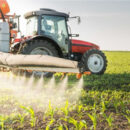
Ilorin, Nigeria — Stakeholders in Nigeria’s agriculture sector have reiterated that the country’s farming productivity will remain stagnant unless it embraces large-scale mechanisation. Speaking at the 50th anniversary of the Nigerian Institution of Agricultural Engineers (NIAE), held at the National Centre for Agricultural Mechanisation (NCAM) in Ilorin, experts emphasized that modern tools and technologies are essential to achieving food security and transforming agriculture into a profitable and attractive venture.
The event also marked the 25th NIAE International Conference, the 45th Annual General Meeting, and a national exhibition showcasing agricultural machinery. Dr. Adamu Dabban, Executive Secretary of the Agricultural Research Council of Nigeria, stressed the urgency of moving away from crude implements like hoes and cutlasses. He called for a nationwide shift toward mechanised farming systems to boost productivity, reduce food insecurity, and position Nigeria for potential agricultural exports.
“Our rate of mechanisation is very low,” Dabban said. “We must adopt modern equipment to increase production and feed our population sustainably.”

Oluwole Ogujini, Co-Chairman of the Central Organising Committee, echoed these sentiments, noting that mechanisation could eliminate the physical burden of farming and make the sector more appealing to young people. He argued that the lack of access to tractors and other mechanised inputs is a major reason youth shy away from agriculture.
“Agriculture is profitable,” Ogujini said, “but the outdated methods make it unattractive. With access to modern tools, young people will be more inclined to participate.”
Ogujini also expressed optimism about the impact of showcasing locally developed technologies at the 2025 conference. He believes that domestic production of agricultural machinery will reduce servicing challenges and stimulate economic growth.
Mrs. Taiwo Kehinde, National Coordinator of Women in Agricultural and Bioresource Engineering in Nigeria (WABEN), highlighted the critical role of women in agriculture and the need for inclusive mechanisation. She called for greater representation of women engineers in decision-making spaces to ensure that machinery is designed with female farmers in mind.
“Women are the backbone of farming in Nigeria,” Kehinde said. “They produce, harvest, and process food, yet their needs are often overlooked. We must develop small-scale technologies that rural women can adopt and use effectively.”
The conference underscored a shared commitment among stakeholders to modernise Nigeria’s agricultural systems, improve food production, and create a more inclusive and economically viable farming sector.