

AFCAS29 Highlights How Gaps in Africa’s Agricultural Statistics Threaten Policy Action
Available in

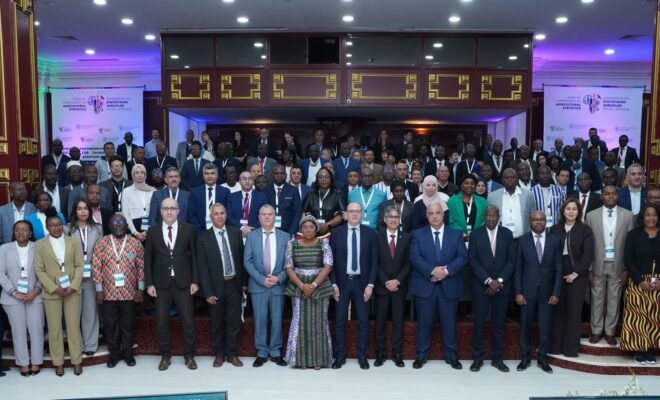
Hammamet, Tunisia – The 29th Session of the African Commission on Agricultural Statistics (AFCAS29) has opened with a strong call to accelerate cooperation and innovation to meet Africa’s urgent need for reliable agricultural data.
Organized by the Food and Agriculture Organization of the United Nations (FAO) and hosted by the Government of Tunisia, the gathering brings together statistics experts from more than 40 African countries under the theme “Effective Partnerships and Leveraging Statistics for Transforming Africa’s Agrifood Systems.”
Tunisia’s Minister of Agriculture, Water Resources and Fisheries, H.E. Ezzeddine Ben Cheikh, welcomed delegates and emphasized the importance of concrete outcomes. “It’s not possible to have agricultural development without recent, reliable and easy-to-use data,” he said. “Agricultural information is a strategic asset to strengthen our collective resilience against the challenges the continent faces.”

FAO Assistant Director-General and Regional Representative for Africa, Abebe Haile-Gabriel, underscored that accurate statistics are fundamental to transforming agrifood systems. “Accurate data empowers farmers, policymakers, and other stakeholders to make informed decisions regarding crop choices, resource allocation, and investments,” he noted.
FAO Chief Statistician José Rosero Moncayo warned that persistent data gaps continue to hinder effective monitoring. He highlighted that fewer than half of African countries report core figures such as agricultural production, while many lack data on land use, fertilizers, pesticides, and water resources. “There is a serious scarcity of data, which limits our capacity to inform evidence-based policy and decisions,” he stressed.
AFCAS29 Agenda
Throughout the week, participants will review progress in several priority areas:
• 50×2030 Initiative: Expanding robust agricultural survey systems to 50 countries by 2030 (23 African nations currently engaged).
• World Programme for the Census of Agriculture (WCA 2030): Endorsing new guidelines and planning censuses for the 2026–2035 cycle.
• Food Balance Sheets: Improving national accounts of food supply.
• Fisheries and forest statistics: Addressing current challenges and strengthening reporting.
• Innovative data approaches: Leveraging geospatial tools, big data, and machine learning to fill gaps and enhance early-warning systems.
• Agricultural Science and Technology Indicators (ASTI): Reviewing first-phase implementation and next steps.
• Food Security and Nutrition (FSN) statistics: Integrating the newly approved UN statistical domain.
About AFCAS
Established in 1962, AFCAS is FAO’s statutory body for agricultural and rural statistics in Africa. Its biennial sessions serve as the continent’s primary forum for setting methodological standards, harmonizing data, and guiding countries toward stronger statistical systems that underpin evidence-based agricultural policy.
AFCAS29 runs from November 24–28, 2025, in Hammamet, Tunisia.