

AGRA Expands Post-Harvest Technologies to Cut Food Losses in Malawi
Available in

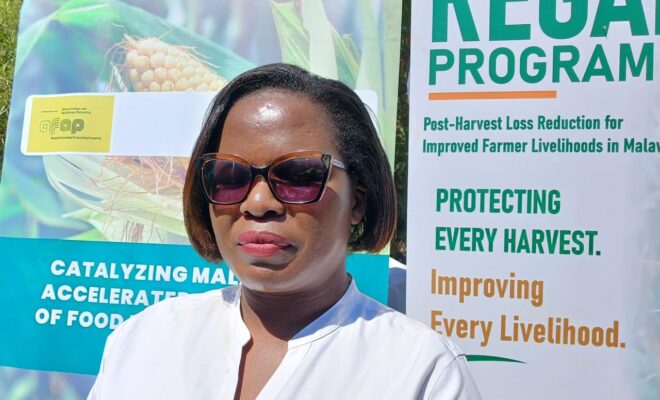
Image: AGRA Country Director Eluphy Nyirenda
The Alliance for a Green Revolution in Africa (AGRA) and its partners are accelerating the adoption of post-harvest technologies among smallholder farmers in Malawi as part of efforts to reduce food losses, improve food security and strengthen climate resilience.
The initiative is being implemented through the Regain Programme, which aims to address one of the most persistent challenges facing agricultural production in the country: significant post-harvest losses that reduce farmer incomes and threaten household food security.

Speaking during a field visit to the Thawale Extension Planning Area in Lilongwe, AGRA Malawi Country Director Eluphy Nyirenda said the programme was designed to strengthen food systems by helping farmers preserve more of their harvests while improving productivity and resilience.
According to AGRA, smallholder farmers can lose up to 30% of their produce due to inadequate storage facilities, poor drying methods, limited access to modern post-harvest technologies and climate-related challenges.
To tackle these losses, the programme is promoting the use of technologies such as hermetic storage bags, maize shellers, threshers and tarpaulins for improved drying and storage of agricultural produce.
Nyirenda said adoption rates have been particularly strong for shellers and threshers, which significantly reduce the labour and time required to process maize after harvest. Farmers are also increasingly using hermetic storage bags to protect grain without relying on chemical preservatives.
The technologies are helping farmers improve the quality of stored produce, reduce waste and preserve crops for longer periods, contributing to stronger household food security and increased market opportunities.
Officials from Malawi’s Ministry of Agriculture have welcomed the programme, describing it as an important step towards improving post-harvest management and strengthening agricultural value chains.
Lilongwe West District Agriculture Extension Methodologies Officer Agnes Lungu said the government remains committed to supporting farmers with knowledge, training and technologies that improve agricultural productivity and reduce losses.
She noted that partnerships between AGRA, the National Smallholder Farmers’ Association of Malawi (NASFAM) and government institutions are helping farmers access technologies at subsidised prices, making them more affordable and accessible.
NASFAM Regain Programme Coordinator Stewart Paul Mapemba said the response from farming communities has been encouraging, with increasing numbers of farmers embracing technologies that improve efficiency and profitability.
Beyond reducing food losses, the programme is helping farmers increase household incomes, improve market access and strengthen resilience to climate-related shocks that continue to affect agricultural production across the region.
The initiative is currently being implemented in six districts and is supported by awareness campaigns delivered through local media platforms and community radio stations. These outreach efforts are helping to expand knowledge of post-harvest technologies and encourage wider adoption among rural communities.
Farmers participating in the programme report that mechanised shelling and threshing technologies have significantly reduced the time required for post-harvest processing, allowing households to focus on other productive economic activities.
The Regain Programme forms part of a broader regional effort to enhance climate resilience and adaptive capacity among smallholder farmers. In Malawi, it is funded by AGRA and implemented by NASFAM and Opportunity International Malawi in partnership with the Ministry of Agriculture and other stakeholders.
As climate change and food security challenges continue to impact agricultural systems across Africa, experts believe reducing post-harvest losses will be critical to improving productivity, increasing rural incomes and strengthening the resilience of farming communities.