Onndindaho Rasilwela, Ex TUT SWEEP chapter semper aliquid novi.
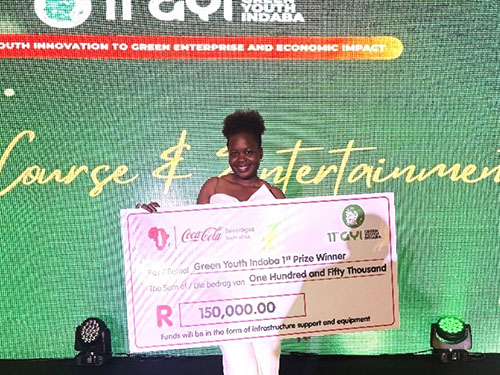
A South African student has developed a biodegradable agricultural mulch made from sugarcane bagasse and maize stalks, earning national recognition for an innovation that could reduce plastic pollution, improve soil health and create new value from agricultural waste.
Onndinadaho Rasilwela, a researcher at the Tshwane University of Technology (TUT), won first prize and R150,000 at the 2026 Green Youth Indaba for her project, which transforms crop residues into biodegradable mulch film for agricultural use.
The annual Green Youth Indaba, held in Sun City from 17 to 19 June, showcases youth-led innovations focused on climate change, sustainable development and the green economy.
Turning waste into value
Rasilwela’s project, titled Comparative Synthesis and Analysis of Bioplastic from Hemp and Maize Stalk, has been developed under the brand name Biomulchies.
The biodegradable mulch is designed to perform the same functions as conventional plastic mulch by suppressing weeds, conserving soil moisture and regulating soil temperature, while naturally decomposing after use instead of leaving long-term plastic residues in the soil.
The innovation utilises sugarcane bagasse and maize stalks, two widely available agricultural by-products across Southern Africa that are often discarded or burned after harvest.
The research also compares hemp and maize stalks as raw materials for bioplastic production to determine which offers the best technical performance and commercial potential for future large-scale manufacturing.
Supporting sustainable agriculture
Conventional polyethylene mulch is widely used to improve crop yields and reduce water losses, but it can break down into microplastics that contaminate agricultural soils and water systems while creating disposal challenges for farmers.
By converting agricultural waste into biodegradable products, the project supports circular economy principles by creating higher-value uses for crop residues while reducing environmental impacts.
The innovation also highlights opportunities to develop new industries around South Africa’s major agricultural commodities, creating additional income streams for farmers and supporting rural industrialisation.
Rasilwela’s achievement emerged through TUT’s Student Women Economic Empowerment Programme (SWEEP), which promotes women’s participation in science, technology and innovation.
As African countries advance circular economy and climate adaptation strategies, innovations such as Biomulchies demonstrate how agricultural waste can be transformed into commercially viable products that support both environmental sustainability and agricultural productivity.
Brandon Moss is the Editor of AgriFocus Africa, where he leads editorial coverage on African agriculture, agribusiness, food security, and rural development. With a strong focus on market intelligence, policy analysis, and industry trends, he oversees content that connects producers, investors, and decision-makers across the continent’s agricultural value chain.