

Gaza Province Aims To Replace South African Vegetable Imports
Available in

Mozambique’s southern Gaza Province is positioning itself as a major agricultural production hub capable of reducing the country’s dependence on vegetable imports from neighboring South Africa.
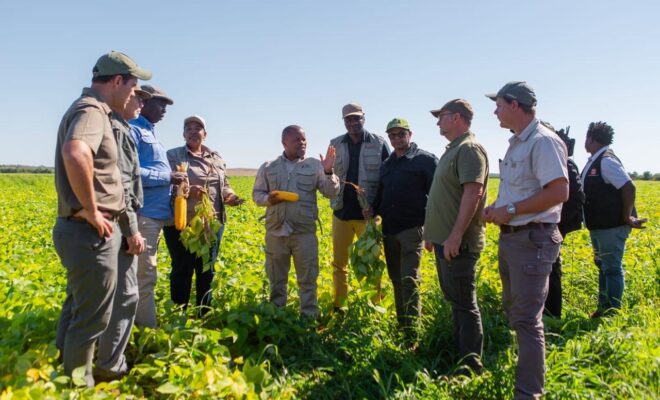
During a working visit to the province, Minister of Agriculture Roberto Albino said Gaza has the potential to significantly increase local production of key vegetables, including potatoes, tomatoes, cabbage, and onions, helping Mozambique improve food security while supporting domestic farmers.
“We want to make a commitment with all stakeholders to a vigorous drive toward fully replacing imports of potatoes, tomatoes, cabbage, and onions,” Albino said during a visit to Massingir Valley Farms, where he met producers and seed companies in Macarretane.

Flood Recovery Demonstrates Agricultural Resilience
The minister praised the recovery efforts of Massingir Valley Farms, which has resumed production on approximately 2,000 hectares after suffering substantial losses during recent floods.
Albino noted that the company had demonstrated remarkable resilience in restoring operations despite severe damage to agricultural infrastructure.
“We were very impressed because they suffered greatly from the floods yet have already recovered. They demonstrated great resilience and commitment to recovery,” he said.
He emphasized the importance of investing in stronger infrastructure capable of withstanding future climate-related challenges.
“We need more than just patching up breaches. We need robust reconstruction that can withstand potential future floods,” he added.
Government Support Boosting Production
In Guijá District, Albino expressed satisfaction with the results of government-supported seed distribution programs aimed at assisting farmers affected by flooding.
According to the minister, farmers have successfully utilized the seeds provided, raising expectations for a strong second production season.
“What we saw in the field shows that the producers made good use of the support received, and we are going to have a very promising second season,” he said.
The government has pledged to continue supporting all previously identified flood-affected farmers through ongoing recovery and agricultural development programs.
Seed Production Opportunities
The minister also visited bean seed production fields and highlighted Guijá’s potential to become a leading center for maize and bean seed production in Mozambique.
Developing local seed production capacity is viewed as a strategic priority for improving agricultural productivity, reducing dependence on imported seed varieties, and strengthening the country’s food systems.
Irrigation Remains A Key Priority
The Chókwè and Lower Limpopo irrigation schemes remain critical to Gaza Province’s agricultural ambitions.
Albino assured farmers that the government is working to ensure irrigation infrastructure is operational for the 2026/27 agricultural season while broader reconstruction efforts continue.
Reliable irrigation is considered essential for increasing production, improving yields, and reducing vulnerability to climate variability in one of Mozambique’s most productive farming regions.
Building A Stronger Agricultural Future
The minister’s visit focused on assessing productive capacity across a region that has faced multiple challenges, particularly severe flooding.
Despite these setbacks, Gaza Province continues to demonstrate strong agricultural potential. With ongoing investment in irrigation infrastructure, seed production, farmer support programs, and climate-resilient farming systems, the province could play a significant role in reducing Mozambique’s reliance on imported vegetables while strengthening national food security.


