
NADF Says Low Investor Confidence is Holding Back African Agriculture

Available in

Low investor confidence, weak institutions and unreliable agricultural data are limiting Africa’s ability to attract the capital needed to transform its food systems, according to Mohammed Ibrahim, executive secretary of Nigeria’s National Agricultural Development Fund (NADF).
Speaking at the 2026 Africa Food Systems Forum in Rwanda, Ibrahim said Africa has significant financial resources available for agricultural development, but stronger leadership, reliable data, predictable markets and credible institutions are needed to convert that capital into investment.
He said investor confidence depends on an agricultural ecosystem where farmers can be identified, reliable production data is available and markets provide sufficient certainty to reduce investment risks. Stronger market linkages and improved access to finance are also needed to make farmers and agricultural businesses more productive and commercially viable.

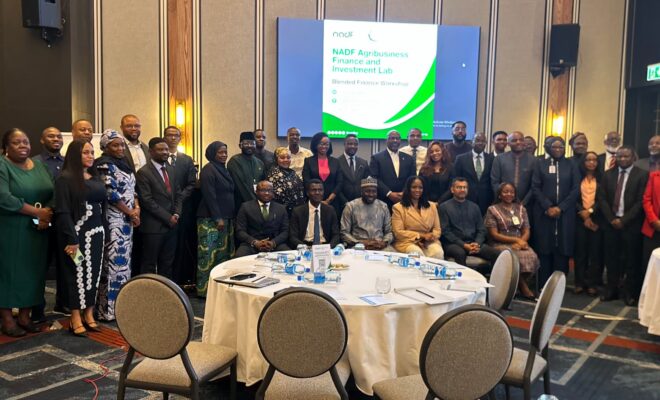
Ibrahim said NADF is increasingly focused on using public funding to attract additional private investment rather than replacing commercial capital. Through blended finance, co-financing, on-lending and partnerships with banks, insurers, processors and development institutions, public resources can be used to reduce risks and address market constraints that discourage investors.
He also called for governments to change how agricultural programmes are measured. Instead of focusing only on how much public money is spent, authorities should assess how much additional private investment is unlocked and what measurable outcomes are achieved.
Ibrahim stressed that farmers must be treated as economic actors rather than beneficiaries of government programmes. Creating investment models that place farmers at the centre could help build a more productive and profitable agricultural sector capable of attracting greater financing from investors, financial institutions and development partners.
For Africa to close its agricultural investment gap, stronger institutions, better data and more predictable markets will be essential. The challenge now is to turn available capital into bankable agricultural opportunities that can deliver food security, jobs and sustainable economic growth.