
AfDB and Brazil Strengthen Cooperation on Agriculture and Private Sector in Mali
Available in

The African Development Bank and the Embassy of Brazil in Mali are strengthening cooperation to support agriculture, food systems and private-sector development as part of efforts to advance Mali’s economic and development priorities.
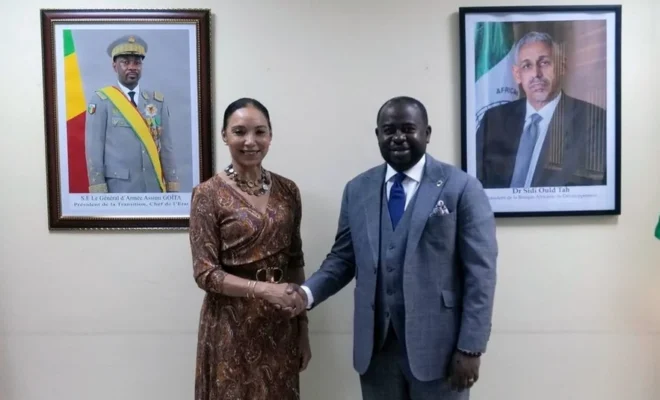
The two institutions met in Bamako on 9 September to discuss implementation of a Memorandum of Cooperation signed by the African Development Bank Group and the Brazilian Cooperation Agency in Abidjan on 12 June 2026.
The agreement provides a framework for South-South cooperation, combining Brazilian technical expertise with the African Development Bank’s development experience to support Mali’s national priorities.

Agriculture and food systems are among the key areas identified for cooperation, alongside private-sector development, climate action, skills development, employment and the country’s energy transition.
The discussions were led by Brazilian Chargé d’Affaires Isabel Christina de A. Heyvaert and AfDB Mali Country Manager Cedric Achille Mbeng Mezui.
The meeting confirmed the priority areas for collaboration and is expected to lead to further planning discussions between the two sides.
The partnership is aligned with Mali’s Vision 2063, its National Strategy for Emergence and Sustainable Development 2024–2033, and the African Development Bank’s Country Strategy for Mali covering 2026–2031.
Under its current strategy, the African Development Bank is prioritising agriculture, transport and energy infrastructure, as well as technical and vocational education and training in Mali.
The Bank is also placing particular emphasis on strengthening opportunities for young people by supporting entrepreneurial, digital and creative skills.
For Mali’s agricultural sector, closer cooperation with Brazil could provide opportunities to expand technical knowledge, strengthen food systems and improve the capacity of the private sector to participate in agricultural development.
The partnership also creates a platform for broader cooperation on climate resilience, employment and economic diversification, linking agricultural development with infrastructure, skills and energy investments.