FAO-China Workshop Promotes Agricultural Heritage and Sustainable Farming in Africa
Available in

A three-day regional workshop in Johannesburg is helping African countries strengthen the management and protection of agricultural heritage systems while promoting sustainable farming practices and knowledge sharing.
The capacity-building programme on Globally Important Agricultural Heritage Systems (GIAHS) brings together government officials, national focal points, site representatives, researchers, civil society organisations and agricultural experts from English-speaking African countries.
Supported through the FAO-China South-South Cooperation Program, the workshop is providing participants with technical knowledge and practical tools to develop GIAHS proposals and identify potential funding opportunities.

A separate workshop is expected to be held for French-speaking African countries.
Expanding Africa’s Agricultural Heritage
The Food and Agriculture Organization of the United Nations currently recognises more than 140 GIAHS sites globally, but only four are located in Africa.
Asia has the largest concentration, with 65 recognised sites, while China accounts for a significant share of the global total.
Jeremie Mbairamadji, senior coordinator of the FAO GIAHS Secretariat, said there is significant potential to increase the number of recognised agricultural heritage systems across Africa.
GIAHS sites recognise agricultural landscapes and farming systems that combine food production with traditional knowledge, biodiversity, cultural practices and the sustainable management of natural resources.
Strengthening these systems can help countries preserve local agricultural knowledge while supporting rural communities and adapting traditional practices to changing environmental and economic conditions.
China Supports Knowledge and Technology Exchange
The programme also highlights growing cooperation between China and African countries on agricultural knowledge and technical capacity.
Mbairamadji said China has supported capacity building through annual training programmes, international exchange visits and the sharing of agricultural practices and technical knowledge.
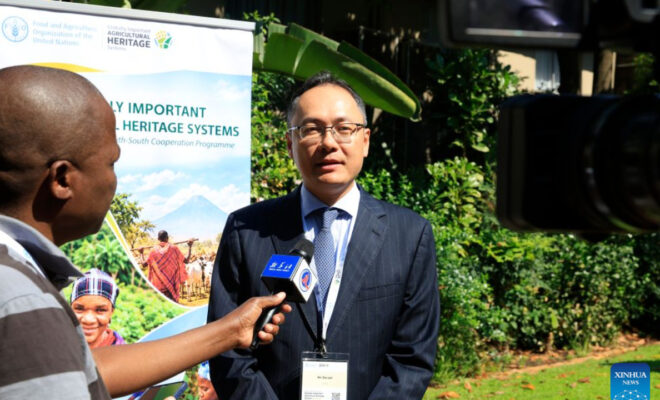
Du Lei, counsellor at the Chinese Embassy in South Africa, reaffirmed China’s commitment to working with the FAO to support African countries in advancing the United Nations Sustainable Development Goals.
For African agricultural institutions, such cooperation provides opportunities to access technical expertise while strengthening local capacity to document, protect and develop traditional agricultural systems.
Agroforestry Gains Attention in South Africa
South Africa is also exploring how agricultural and environmental programmes can benefit from international knowledge exchange.
Morongoa Leseke, chief director at the country’s Department of Forestry, Fisheries and the Environment, welcomed the workshop as South Africa expands its national tree-planting programme.
She highlighted the potential value of learning from China’s agricultural technology and expressed interest in working with the FAO to train local communities in agroforestry.
The focus on agroforestry reflects a broader effort to connect agricultural production with environmental management, allowing communities to integrate trees into farming systems while supporting soil health, biodiversity and sustainable land use.
The Johannesburg workshop is therefore providing a platform for African countries to strengthen their agricultural heritage systems while exploring how traditional knowledge, modern technology and international cooperation can contribute to more resilient rural economies.
Image: Du Lei, counselor at the Chinese Embassy in South Africa, speaks during an interview with Xinhua in Johannesburg, South Africa, Sept. 28, 2026. (Xinhua/Chen Wei)