
Kenya Sugar Board Elections Enter Final Stretch as Farmers Seek Stronger Representation
Available in

Campaigns for the Kenya Sugar Board (KSB) grower representatives’ elections are intensifying ahead of Tuesday’s November 24 vote, which will see sugarcane farmers elect five representatives to the industry’s top decision-making body.
The election features 20 shortlisted candidates competing across five sugar-growing catchment areas, with each region electing one representative under Section 6 of Kenya’s Sugar Act, No. 11 of 2024.
The vote comes at a critical time for Kenya’s sugar industry, as farmers continue to face delayed payments, high production costs, deteriorating rural access roads and limited availability of high-yielding, early-maturing sugarcane varieties.

The Ministry of Agriculture and Livestock Development confirmed the election date through a notice issued on 30 October 2026. The ministry said the final voters’ register had been published on the Kenya Sugar Board website and displayed at designated polling stations and factory facilities, in accordance with Rule 9(7) of the Procedure for Election of Grower Representatives to the Kenya Sugar Board, 2025.
The ministry also emphasised that the election would follow the applicable legal framework and comply with existing court orders, amid previous disputes surrounding leadership transitions in the sugar industry.
Five regions contest board representation
The elections will cover five geographical catchments, with candidates campaigning on issues affecting farmers and the sustainability of sugarcane production.
In Upper Western, five candidates are competing for the seat: James Mutele Weindaba, Wekesa Christopher Sifuna, Ronald Mwende Inyangala, Nelson Shilunji Taliti and Musa Wangila Makhabila.
Lower Western has four candidates: Elizabeth Akinyi Apopo, Janet Barasa Afaro, Eliud Wafula Maelo and Billy Wanjala Mukenya.
The Central catchment, covering the Nyanza and Rift Valley sugarcane belt, also has five contenders: Samwel Onyango Ong’ow, Jared Omulo Okowa, Moses Kibet Biegon, Andrew Kipngeno Bett and Richard Ochieng Ogendo.
In the Southern catchment, John Ole Kararam, Iscar Atieno Oluoch, Peter Otieno Midodo, John Masiantet Seini and Joseph Lenteiyion Ole Kasae are contesting the position.
Meanwhile, Daniel Sila Kitivo is the sole shortlisted candidate in the Coastal catchment and is therefore positioned to secure the seat unopposed.
Candidates highlight farmers’ financial and production challenges
Candidates have been engaging farmers through village meetings and public forums, presenting proposals to address longstanding challenges affecting sugarcane growers.
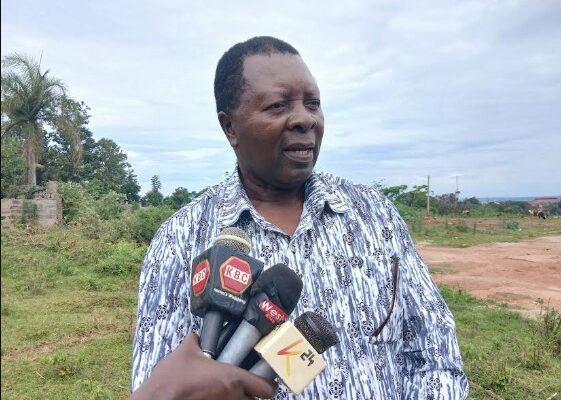
In Upper Western, candidate James Mutele Weindaba is campaigning on a platform that combines agricultural research experience, financial management and commercial sugarcane farming.
A former researcher at the Kenya Agricultural Research Institute (KARI), now the Kenya Agricultural and Livestock Research Organisation (KALRO), and former finance manager at South Nyanza Sugar Company (Sony Sugar), Weindaba says his experience cultivating more than 60 acres of sugarcane has given him direct insight into farmers’ production and financial challenges.
He is advocating subsidised fertiliser, timely financing for weeding and access to disease-resistant sugarcane varieties.
He also wants agricultural research and extension services decentralised to Western Kenya, with soil scientists deployed to identify varieties suited to different ecological conditions.
To reduce farmers’ dependence on expensive lenders, Weindaba is proposing structured agricultural credit facilities backed by cane supply contracts. These would enable growers to finance farm operations as well as household expenses such as school fees and medical bills.
He has also called for crop insurance schemes and stronger cooperative societies to improve farmers’ collective bargaining power.
Infrastructure and transport costs remain concerns
Poor rural roads and transport challenges continue to affect sugarcane deliveries, with farmers losing produce through spillage and delays.
Weindaba wants greater accountability in the management of county cess collections and the reinstated Sugar Development Levy (SDL), arguing that the funds should support the rehabilitation of feeder roads and bridges serving sugarcane-growing communities.
He is also proposing the decentralisation of weighbridges to bring them closer to farms and the streamlining of cane delivery permits to reduce exploitation by middlemen.
Election preparations and farmer participation
The election process began on 12 May 2026, when the Elections Committee invited applications. The application period was subsequently extended on 7 August, and the final list of shortlisted candidates was published on 14 August.
As campaigning approaches its conclusion, candidates and farmer organisations have called on the Elections Committee and security agencies to ensure a free, fair and peaceful election.
Weindaba urged authorities to provide all candidates with equal opportunities and encouraged registered sugarcane growers to participate.
Farmers intending to vote must present their original national identity cards together with documentary evidence of cane supply to a registered sugar miller.
The election will determine the five grower representatives who will sit on the Kenya Sugar Board, providing an opportunity for farmers to influence decisions affecting regulation, production, payments and the wider sugarcane value chain.
The outcome is expected to be important for an industry seeking improved transparency, timely payments, lower production costs and greater profitability for sugarcane growers.