
South Africa’s Macadamia Industry at a Crossroads as Export Pressures Mount

Available in

South Africa’s macadamia industry is entering a decisive new phase after more than a decade of rapid expansion and record-breaking prices. Industry leaders are warning that the growing export of in-shell nuts to Asia could undermine local processing capacity and weaken the country’s long-term competitiveness.
Speaking at the fifth annual Ambermacs Macadamia Expo in White River, Duncan Allen, executive head of Green Farms Nut Co, cautioned that the sector faces a structural shift that could reshape its value chain.
Exporting Value or Eroding It?

South Africa remains the world’s largest macadamia producer, with most of its crop exported to Asia, Europe and North America. Historically, the country built its competitive edge on cracking, sorting and exporting high-quality kernels locally.
However, demand from Asian buyers for premium in-shell nuts has surged. While attractive in the short term, Allen warned this trend could hollow out domestic processing.
“If we export our best cracking nuts and keep lower-margin material locally, we lose the most valuable part of the value chain,” he said. “We risk becoming a supplier of unprocessed commodity.”
Asian processors, particularly in Vietnam and China, are increasingly purchasing South African in-shell nuts, cracking them abroad, and selling kernels back into global markets that South African processors once dominated.
Allen described this shift as a potential “one-way door.” Once factories operate below capacity, fixed costs rise, profitability shrinks, and closures follow. Skills are lost, assets are downgraded, and regional employment declines. Rebuilding that infrastructure would be costly and slow.
From Boom to Reality
Between 2010 and 2022, Africa’s macadamia orchards expanded dramatically—from around 17 000 hectares to over 80 000 hectares. Billions of rands were invested in orchards, processing plants and infrastructure as global demand surged and prices soared.
“It was a period of easy money and optimistic assumptions,” Allen reminded growers.
But post-COVID market cooling, economic uncertainty and expanding global supply have reshaped the landscape. Prices have fallen sharply from peak levels, leaving highly leveraged producers under pressure.
High-cost producers, farms in marginal production areas, and businesses carrying significant debt are now particularly vulnerable.
“The biggest mistake is to assume prices will return to previous highs,” Allen warned. “In the short term, profits must come from efficiency, not price recovery.”
Consolidation Ahead
Allen predicts accelerated consolidation between 2026 and 2028. Asset write-downs, opportunistic farm sales and farmer exits are expected to increase as weaker operations struggle.
Supply growth may only stabilise around 2032, leaving a smaller but more resilient industry core. Stronger producers are likely to be those operating in core regions such as KwaZulu-Natal, Mpumalanga and Limpopo, with modern orchards, improved cultivars and disciplined financial management.
Cost control and yield stability will define competitiveness. Producers investing in precision irrigation, better fertiliser strategies and orchard monitoring systems will have an advantage.
Efficiency Over Expansion
According to Allen, the next phase of industry growth will not be driven by expansion or speculative planting, but by operational excellence.
“The next phase won’t be driven by brilliant ideas,” he said. “It will be driven by hard, necessary efficiency gains.”
Precision agriculture, digital traceability, improved post-harvest handling and higher cracking percentages will be critical. Processing plants must maximise healthy kernel recovery while minimising waste.
At the same time, market development remains vital. Premium positioning, value-added products and targeted consumer education in key export markets could help rebuild margins over time.
“We have a world-class product,” Allen said. “Market development and product innovation is where the biggest long-term returns lie.”
Industry Reflection at Ambermacs Expo
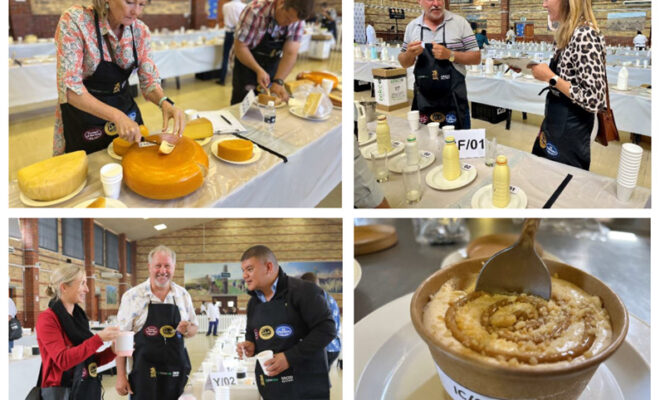
The Ambermacs Macadamia Expo, held on 5–6 February in White River, drew around 3 000 attendees and more than 150 exhibitors. The programme focused heavily on precision farming, pest management, irrigation innovation and traceability technologies such as blockchain.
Against a backdrop of rising input costs and tightening credit conditions, the event reflected an industry pivoting from rapid expansion to strategic consolidation.
A Critical Five-Year Window
Despite current pressures, Allen struck a cautiously optimistic tone. He believes that if South Africa maintains local processing capacity, enforces capital discipline and relentlessly improves efficiency, the industry can emerge stronger.
The next five years will test balance sheets, strategic discipline and management skill. But they may also correct excesses from the boom years and lay the foundation for a more resilient sector.
For the South Africa macadamia industry, the challenge is clear: protect value addition at home, control costs aggressively, and develop markets patiently.
If these steps are taken, the country can retain its leadership in global macadamias—not just as a producer, but as a value-added powerhouse.