Africa’s Fertiliser Crisis Revives Interest in Chemical-Free Farming Alternatives

Available in

As fertiliser prices remain volatile and supply disruptions continue affecting agricultural production across the continent, growing attention is shifting toward chemical-free farming alternatives as a potential solution for African food systems.
An opinion article published by Al Jazeera argues that Africa’s worsening fertiliser crisis is exposing the vulnerability of import-dependent agricultural systems while creating momentum for regenerative and organic farming approaches.
The article highlights how rising global fertiliser prices — intensified by geopolitical tensions, supply chain disruptions and energy market volatility — continue placing severe pressure on African farmers already struggling with climate shocks and rising production costs.

Fertiliser dependence increasing production risks
Many African countries rely heavily on imported fertilisers, leaving local food systems exposed to international market fluctuations.
Since the Russia-Ukraine conflict disrupted global fertiliser and grain supply chains, farmers across Africa have faced sharp increases in input costs, reduced fertiliser access and declining affordability.
The pressure has been particularly severe for smallholder farmers who often lack access to financing and are unable to absorb sudden cost increases during planting seasons.
The article argues that the current crisis demonstrates the risks associated with highly input-dependent agricultural models, especially in regions where fertiliser access remains inconsistent and expensive.
Regenerative farming gaining attention
Supporters of regenerative and agroecological farming systems say Africa has an opportunity to expand lower-cost, environmentally sustainable agricultural methods that rely less on synthetic fertilisers.
These approaches include:
- Composting
- Crop rotation
- Intercropping
- Organic soil management, and the use of natural biofertilisers.
Advocates argue that such systems can improve soil health, strengthen climate resilience and reduce long-term dependence on imported agricultural chemicals.
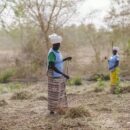
Across parts of Africa, farmers are increasingly experimenting with regenerative agriculture as they respond to unpredictable rainfall patterns, degraded soils and higher production costs.
Debate continues over productivity and food security
Despite growing interest in chemical-free farming, debate continues around whether organic and regenerative systems can produce sufficient yields to meet Africa’s rapidly growing food demand.
Critics argue that synthetic fertilisers remain essential for boosting productivity and preventing food shortages, particularly in countries facing declining soil fertility and rising population growth.
Others believe a hybrid approach combining improved soil management with more efficient fertiliser use may offer the most practical pathway for African agriculture.
Africa searching for long-term agricultural resilience
The broader discussion reflects increasing concern about the resilience of African food systems under mounting climate, geopolitical and economic pressure.
Agricultural experts warn that long-term food security will likely depend on building more diversified and locally resilient farming systems capable of withstanding repeated global supply disruptions.
At the same time, policymakers across Africa continue exploring ways to strengthen local fertiliser production, improve farmer access to agricultural inputs and support climate-smart farming practices.
The fertiliser crisis has therefore become more than a short-term supply challenge — it is increasingly reshaping debates around the future direction of African agriculture and food production systems.