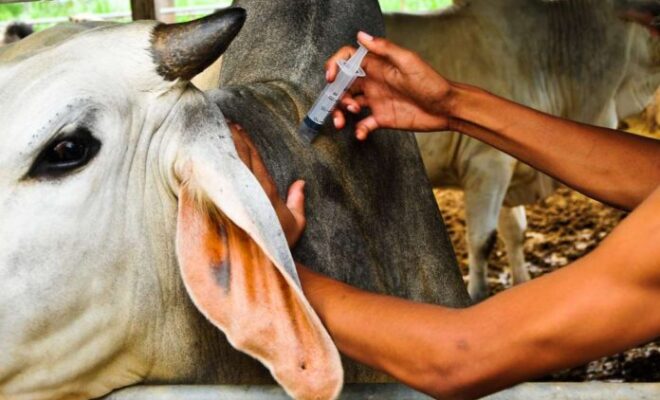
Kenya is intensifying efforts to modernise its livestock sector through large-scale vaccination programmes, digital animal registration systems and expanded veterinary infrastructure as the government pushes to strengthen food security and boost agricultural exports.
The country has launched multiple nationwide livestock vaccination initiatives targeting millions of cattle, sheep and goats in response to rising disease outbreaks and growing demand for higher-quality livestock production systems.
Kenya’s livestock sector contributes roughly 12% of national GDP, supports more than 10 million households and employs about half of the agricultural labour force, making animal health a critical component of the country’s agricultural strategy.
Government expands livestock vaccination campaigns
Kenyan authorities are increasing vaccination coverage against major livestock diseases including Foot and Mouth Disease (FMD) and Peste des Petits Ruminants (PPR), which continue threatening pastoral livelihoods and regional livestock trade.
The government has committed to vaccinating millions of animals across the country, with long-term plans targeting 22 million cattle and 50 million sheep and goats.
Officials say the vaccination drive aims to improve animal productivity, strengthen disease surveillance and increase Kenya’s eligibility for livestock and meat exports in international markets.
Cross-border vaccination campaigns are also expanding in pastoral regions bordering Ethiopia, where Kenya and Ethiopia are jointly targeting nearly five million livestock to reduce the spread of transboundary animal diseases.
Digital livestock tracking gains momentum
Alongside vaccinations, Kenyan counties are introducing digital livestock registration systems to improve animal tracking and veterinary service delivery.
In Kirinyaga County, authorities recently launched a digital livestock identification programme using cattle muzzle recognition technology, which functions similarly to fingerprint identification in humans. The initiative is being implemented alongside an FMD vaccination campaign targeting over 80,000 cattle.
Government officials say improved livestock databases will support data-driven farming, better planning and more effective disease response systems.
Kenya modernises livestock production systems
The vaccination campaign forms part of broader reforms aimed at transforming Kenya’s livestock industry from traditional extensive farming into a more productive, science-driven commercial sector.
Recent investments in animal nutrition, feed manufacturing and veterinary vaccine production are supporting this transition.
Earlier this year, global nutrition company De Heus Kenya opened a KSh3 billion animal feed manufacturing facility in Athi River as Kenya seeks to double milk and meat production while positioning itself as a regional livestock powerhouse.
The government has also unveiled a KSh10.8 billion strategic plan for the Kenya Veterinary Vaccines Production Institute aimed at increasing local vaccine production, modernising infrastructure and strengthening food security.
Misinformation remains a challenge
Despite progress, livestock vaccination programmes have faced resistance in some communities due to misinformation surrounding vaccines and animal health initiatives.
Public debate intensified after social media claims falsely linked livestock vaccination campaigns to foreign-funded climate programmes. Kenyan officials have repeatedly denied these claims while emphasising the importance of vaccination in controlling disease outbreaks and protecting export markets.
Agricultural experts warn that improving livestock health will remain essential for strengthening rural incomes, food production and export competitiveness as climate pressures and disease risks continue affecting pastoral communities across East Africa.
Brandon Moss is the Editor of AgriFocus Africa, where he leads editorial coverage on African agriculture, agribusiness, food security, and rural development. With a strong focus on market intelligence, policy analysis, and industry trends, he oversees content that connects producers, investors, and decision-makers across the continent’s agricultural value chain.