

No African Country Meets Malabo Agricultural Targets, FAO Review Finds
Available in

No African country has met the overall agricultural development benchmark under the Malabo Declaration, exposing persistent gaps in public spending, agricultural research and the implementation of commitments to transform the continent’s food systems.
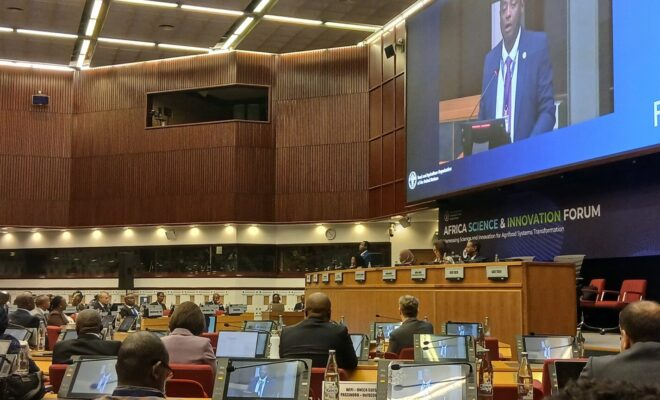
The findings are outlined in the fifth Comprehensive Africa Agriculture Development Programme (CAADP) Biennial Review, presented at the Africa Science and Innovation Forum in Addis Ababa. According to Abebe Haile-Gabriel, the Food and Agriculture Organization of the United Nations’ Assistant Director-General and Regional Representative for Africa, the results show that progress has been made, but remains insufficient to meet the continent’s agricultural ambitions.
Of the 45 countries that submitted reports, none achieved the overall Malabo benchmark. Only four met the target of allocating at least 10% of public expenditure to agriculture, while just five devoted at least 1% of agricultural gross domestic product to agricultural research.

The results raise concerns about Africa’s ability to accelerate agricultural productivity, improve food security and strengthen resilience against climate shocks, conflict and economic pressures.
Haile-Gabriel called on governments to provide predictable funding, strengthen institutions and ensure that agricultural development plans include clear responsibilities, implementation timelines and accountability mechanisms. He warned that political commitments must translate into actual budget allocations, disbursements and measurable benefits for producers.
Agricultural research and funding remain major gaps
The review highlights the continuing gap between governments’ agricultural development commitments and the resources directed towards achieving them.
Insufficient public investment can limit access to essential services, infrastructure, research and technologies needed to raise productivity. Agricultural research is particularly important for developing improved crop varieties, strengthening soil management and helping farmers respond to changing climate conditions.
The findings also point to the need for stronger links between research institutions and farmers, ensuring that scientific advances translate into practical improvements in production and rural livelihoods.
Ethiopia’s State Minister of Agriculture, Sofia Kassa, called for greater investment, stronger partnerships and practical innovation to accelerate the transformation of African agrifood systems. She highlighted the country’s wheat self-sufficiency efforts, Green Legacy Initiative and Lema Trufat initiative as examples of programmes intended to turn policy commitments into coordinated action.
However, she acknowledged that improving productivity, strengthening market connections and expanding access to finance and technology remain significant challenges, particularly for smallholder farmers in rural areas.
Digital technology must reach smallholder farmers
The FAO also warned that Africa risks losing agricultural competitiveness as artificial intelligence, robotics, satellite monitoring and data-driven systems increasingly influence global food production and natural resource management.
Internet connectivity remains a major obstacle. Citing International Telecommunication Union figures, Haile-Gabriel said internet usage in Africa stood at 36% in 2025, compared with approximately 75% globally.
The gap highlights the difficulty of ensuring that digital agricultural services reach smallholder farmers, especially those in remote areas with limited connectivity and access to technology.
Nevertheless, agricultural innovation does not depend exclusively on advanced equipment. Improved seeds, healthier soils, animal health services, affordable water management, and safer food handling, storage and processing remain essential to improving production and reducing losses.
Haile-Gabriel cited an FAO-supported South-South and triangular cooperation initiative in which farmers reported harvesting four times as much rice from the same cultivated land following support that included improved drainage and seedling spacing.
Kassa said innovation should combine emerging technologies, including artificial intelligence, robotics, digital platforms, precision agriculture and biotechnology, with institutional reforms that help turn research and knowledge into practical results.
Turning commitments into measurable progress
The Malabo Declaration established agricultural development commitments for African Union member states, including increased public investment and stronger efforts to improve productivity and food security. The CAADP Biennial Review assesses countries’ progress against these commitments.
The latest findings reinforce the need for governments to connect agricultural policies with reliable financing, effective implementation and measurable outcomes. They also underline the importance of investing in research, rural infrastructure and technology that farmers can realistically access.
For African agriculture, the challenge is not simply to announce ambitious development targets, but to ensure that funding reaches programmes capable of delivering practical benefits. Stronger accountability, sustained investment and closer cooperation between governments, researchers and producers will be crucial to building more productive, resilient and competitive agrifood systems.


