

Kenya Moves to Strengthen Agricultural Research and Policy through Proposed ACE Lab
Available in

Kenya is seeking to strengthen the link between agricultural research and policy decisions through a proposed Agriculture and Climate Evidence (ACE) Lab, as stakeholders work to ensure that research findings inform investment priorities and national agricultural programmes.
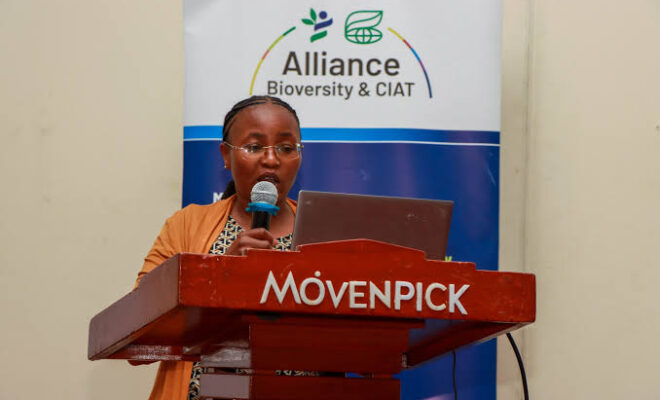
The initiative was discussed at a stakeholder consultation held in Nairobi on 12 October 2026, bringing together 31 representatives from government, universities and research institutions.
The consultation was organised by Kenya’s Ministry of Agriculture and Livestock Development (MoALD), the Kenya Agricultural and Livestock Research Organization (KALRO), Innovations for Poverty Action (IPA) and the International Food Policy Research Institute (IFPRI).

Kenya has an active agricultural research community producing evidence on climate resilience, food security, productivity and rural livelihoods. However, this evidence does not always translate into policy and investment decisions. Research priorities can differ from policymakers’ needs, while inconsistent indicators make it difficult to compare findings across studies.
The proposed ACE Lab aims to help address these gaps by improving coordination around agricultural evidence and establishing shared research and learning priorities.
CGIAR initiative provides framework for agricultural evidence
During the consultation, IFPRI presented work under the CGIAR MELIAF Kenya Activator, which seeks to connect agricultural research with shared national priorities and common measures of results.
The initiative has developed a country-level theory of change mapping how CGIAR and partner innovations contribute to Kenya’s agri-food system priorities. Its pathways are linked to commitments under the CAADP Kampala Declaration and the National Agri-Food System Investment Plan (NASIP) 2026–2030.
The Activator has also developed harmonised indicators based on the CGIAR results framework. These cover livelihoods, food security and nutrition, gender and social inclusion, climate adaptation, and environmental sustainability.
The indicators are being tested across six independently designed impact evaluations in Kenya, with the aim of making research findings easier to compare across interventions and contexts.
Stakeholders identify gaps in agricultural evidence
Participants examined the proposed theory of change, assessing its relevance to Kenya’s agricultural priorities, the assumptions behind its pathways and the strength of available evidence.
The discussions highlighted opportunities to establish a shared research agenda where important agricultural challenges are not yet supported by sufficient evidence.
Stakeholders also recognised the value of linking research outcomes to national, regional and global policy indicators.
However, they noted that putting the harmonised indicators into practice would require stronger connections with existing data collection and monitoring systems, as well as clearer identification of where relevant data can be accessed.
Next steps for the proposed ACE Lab
The CGIAR MELIAF Kenya Activator will use feedback from the consultation to refine its theory of change, including aligning its pathways more closely with NASIP’s priority areas.
It will also continue developing the harmonised indicators to support more consistent measurement of agricultural research outcomes.
IFPRI will share the refined theory of change and indicators as inputs into the ACE Lab’s draft work plan. The proposed activities will subsequently be validated through wider stakeholder engagement.
Both outputs are also expected to contribute to broader efforts to align agricultural research with Kenya’s national priorities and CAADP commitments.
The consultation forms part of wider efforts to strengthen evidence-based agricultural policymaking and improve coordination between research institutions, government agencies


