

Tanzania Strengthens Agricultural Training to Bridge Gap Between Classroom Learning and Farm Practice
Available in

Tanzania is investing in agricultural education and practical training to equip future professionals with the skills needed to improve farm productivity, support smallholder farmers and respond to changing demands in the agricultural sector.
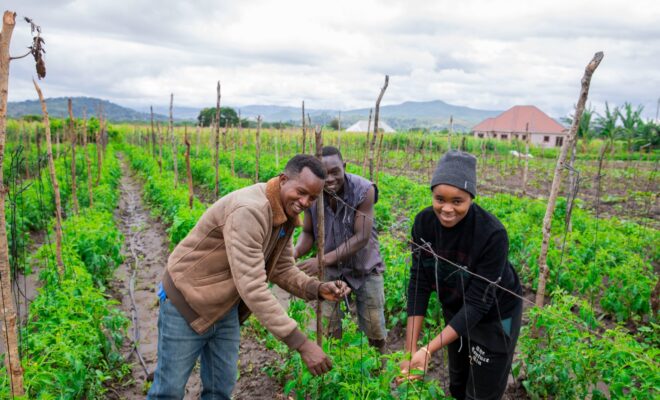
At Tumbi Agricultural Training Institute in Tabora, the Curriculum Implementation Support for Training Institutes (CISTI) Project, implemented by Sustainable Agriculture Tanzania (SAT), is helping strengthen the link between classroom learning and practical farming.
The initiative has benefited more than 2,000 students at Tumbi, while supporting improvements in teaching materials, tutor capacity, practical training facilities and farmer outreach.

Tumbi Principal Barnaba Makavu said SAT had supported curriculum development, incorporated cross-cutting issues such as gender into teaching and provided equipment for online learning, conferencing and student admissions.
The project has also established greenhouse infrastructure where students and tutors can develop practical skills, observe production processes and apply classroom knowledge.
“Since CISTI started, more than 2,000 students have received training that enables them to go and help farmers in villages, with about 300 graduates every year,” Makavu said.
He added that the institute was continuing to strengthen the capacity of tutors and students to meet modern agricultural requirements, particularly by integrating crop and livestock production into training programmes.
According to Makavu, Tumbi students have reached between 4,000 and 5,000 farmers through the initiative, providing practical advice intended to improve farming methods and productivity.
Tumbi Farm Manager Jeremia Obed said the programme was helping prepare young agricultural professionals to support farmers in moving away from traditional production methods.
He emphasised that agricultural transformation required participation from all stakeholders, including training institutions, farmers and development organisations.
CISTI expands agricultural training across Tanzania
The work at Tumbi forms part of a wider national initiative implemented by SAT in collaboration with the Ministry of Agriculture’s Division of Training and Research (DTR).
CISTI focuses on strengthening competency-based training across Agricultural Training Institutes (ATIs), aligning educational programmes with labour market requirements and the practical needs of the agricultural sector.
Funded by the Liechtenstein Development Service (LED), the project supports public and private training institutions in producing skilled agricultural professionals, promoting agroecological practices and improving the livelihoods of smallholder farmers and pastoralists.
Project Manager Kashindye Salum said CISTI directly reached 26,297 people between 2019 and 2025, including 6,647 farmers, 1,530 tutors and management staff, 117 garden attendants and 18,003 students. The farmers reached included 174 organic champion farmers.
The first phase, implemented between 2020 and 2022, directly reached 12,427 people. This included 3,856 farmers who participated in farmer open days at agricultural training institutes, 915 tutors and principals, 117 garden attendants and 7,539 students.
During this phase, the project supported eight academic reference publications, printing and distributing 4,200 copies, and established 29 demonstration gardens to strengthen practical learning.
The second phase expanded competency-based curricula across 30 agricultural training institutes, directly benefiting another 13,870 people. These included 10,464 students, 394 tutors, 221 management staff and 2,791 farmers, among them 174 organic champion farmers.
Investment in practical facilities and learning materials
The second phase also increased investment in training infrastructure and agricultural learning resources.
CISTI supported eight additional academic reference materials, with 3,060 copies printed and distributed, alongside three textbooks and four practical manuals totalling 2,170 copies.
SAT also developed an Organic Farming Guide in Kiswahili and distributed 3,000 copies to improve farmers’ access to practical agricultural knowledge.
Practical training was strengthened through the establishment of 33 screenhouses and demonstration gardens. The project also procured and distributed equipment, including Global Positioning System (GPS) devices and Munsell soil colour charts.
At SAT’s Farmer Training Centre, improvements included 30 fully furnished accommodation rooms, a furnished cafeteria and a training hall.
Across the programme, 16 academic reference publications were prepared and formalised, covering subjects such as organic farming, gender in agriculture, environmental management, communication skills, cooperative principles, agricultural mathematics, extension services, marketing and entrepreneurship.
Other subjects included soil and water conservation, animal feeding, human nutrition, farm records, occupational hazards and risk management, project management, and food crop processing and preservation.
A total of 9,430 copies of these publications were printed and distributed to agricultural training institutions across the country.
Strengthening links between colleges and farming communities
SAT’s approach combines improved teaching, tutor development, practical learning facilities and direct engagement with farmers to ensure agricultural education responds to real production challenges.
Salum said beneficiaries had gained better access to learning resources, stronger teaching capacity and improved practical training environments.
He noted that connecting agricultural institutions with farming communities was essential to ensuring that graduates could translate technical knowledge into practical solutions.
At Tumbi, the benefits are reflected in the students trained, infrastructure established and farmers reached through outreach programmes.
The project aims to ensure that agricultural graduates are better equipped to promote improved farming practices, support agroecological production and address the changing needs of farming communities.
As Tanzania continues to strengthen its agricultural sector, investment in relevant training, practical facilities and farmer advisory services will remain important in developing the skilled workforce needed to improve productivity and support sustainable rural livelihoods.


