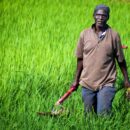

Women Farmers Driving Greener Growth in Sub-Saharan Africa

Available in

By Brandon Moss
Across sub-Saharan Africa, women make up nearly half of the agricultural workforce, yet they remain disproportionately excluded from formal markets, financing, and decision-making. A new report from the African Centre for Agroecology reveals that empowering women through agroecological practices could be the key to unlocking sustainable food systems.
In Uganda’s Mbale region, women-led cooperatives are using composting and intercropping to regenerate soil and increase yields without synthetic inputs. In Zimbabwe, conservation agriculture is helping female farmers withstand erratic rainfall and drought. These practices not only improve productivity but also reduce dependence on costly fertilizers and pesticides, freeing up income for household needs and education.

Agroecology also fosters community-based certification systems, allowing women to sell produce at premium prices in local and regional markets. With support from NGOs and regional governments, these grassroots movements are gaining traction. Experts say scaling agroecology could transform rural economies, reduce gender inequality, and build climate resilience across the continent.