
Senegal’s Great Green Wall: A Cautionary Tale for Africa’s Climate Ambitions
Available in

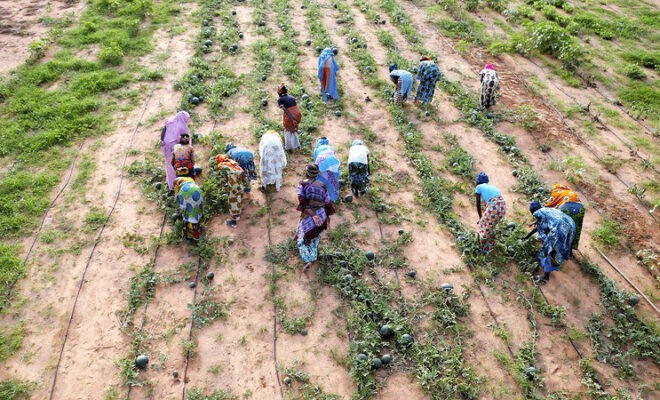
Photo credits: Thiery Berrod (Sciencephoto.com). Great Green Wall farming.
Senegal, once considered a model for Africa’s Great Green Wall (GGW) initiative, is now facing serious setbacks. Despite international pledges totaling $23 billion—including $14 billion announced at the 2021 One Planet Summit—a recent study reveals that only a fraction of the promised funds have been delivered. Between 2011 and 2019, just $149 million of the $870 million pledged to Senegal can be traced in national records, raising concerns about transparency and accountability.
A Vision Undermined by Inaction

The GGW was launched to combat desertification across 11 Sahelian countries, aiming to restore ecosystems, improve livelihoods, and reduce migration pressures. Senegal’s early efforts showed promise, with seasonal employment, community nurseries, and training programs benefiting rural villages. These initiatives were vital in a region where 65% of the population depends on agriculture and 45% of the land is degraded.
However, satellite data tells a different story. Of 36 reforested plots studied in northern Senegal, only two showed visible greening, and just one exceeded what could be attributed to rainfall. The ecological impact falls short of the political rhetoric.
Funding Gaps and Accountability Challenges
]The study, published in Land Use Policy and reported by Mongabay, highlights that over 80% of pledged funds lack public accountability. This undermines trust not only in Senegal but across Africa. As lead author Annah Lake Zhu of Wageningen University noted, “If it remains a dream, it risks becoming a mirage.”
The GGW’s dependence on external financing has created a cycle of vulnerability. At the 2025 AMCEN session in Kenya, former UNCCD chief Ibrahim Thiaw urged African nations to build domestic green finance capacity rather than rely on uncertain global support. Co-author Amadou Ndiaye echoed this sentiment, calling the overreliance on foreign aid “an original sin.”
Disconnects in Implementation
Despite strong grassroots participation, national GGW agencies are often excluded from project design and implementation. This disconnect weakens transparency and community ownership—both essential for long-term success. Without integrating local knowledge and ensuring consistent oversight, restoration efforts risk becoming symbolic rather than substantive.
Climate Urgency and Migration Risks
The Sahel is warming 1.5 times faster than the global average, with erratic rainfall and worsening land degradation. Each failed hectare represents not just lost vegetation, but lost livelihoods and increased migration risk. The World Bank projects up to 85 million internal climate migrants in Sub-Saharan Africa by 2050.
A Call for Leadership and Long-Term Vision
The GGW was never just about planting trees—it was about planting resilience. Senegal’s experience underscores the need for credible financing, local integration, and long-term commitment. Africa must lead its own restoration story, not wait for global applause.
Will the Great Green Wall stand as Africa’s triumph against climate adversity—or as a cautionary tale of missed opportunities? The answer lies in turning promises into progress and dreams into rooted change.