How Southern African Farmers and Elephants Are Learning to Coexist
Available in

Across Southern Africa, growing human–elephant conflict is forcing communities, governments and conservation groups to rethink how people and wildlife share land. As elephants increasingly move beyond protected areas into farming zones, crop losses, damaged infrastructure and safety risks have triggered renewed calls for culling in countries such as Zimbabwe.
Research shows tolerance depends largely on economic outcomes. In northwestern Zimbabwe, communities were far more supportive of elephant conservation when livelihoods benefited through tourism, employment or regulated use. Where farmers bore only the costs, support for culling rose sharply.
Rather than relying on lethal controls, conservation groups are promoting coexistence through adaptation and technology. Around Hwange National Park, satellite collars and virtual geofences now track elephant movements. When herds cross into farming areas, early-warning alerts are sent via SMS and WhatsApp, giving farmers time to protect crops and call in rangers. While still developing, these systems are already reducing conflict.

In Botswana’s Okavango Panhandle, “elephant-aware farming” encourages producers to respect elephant corridors, cluster farms away from movement routes and plant fast-maturing crops. Farmers who comply gain access to premium markets, linking conservation behaviour directly to higher incomes. Elephants, meanwhile, have adapted by moving mostly at night and avoiding cultivated land.
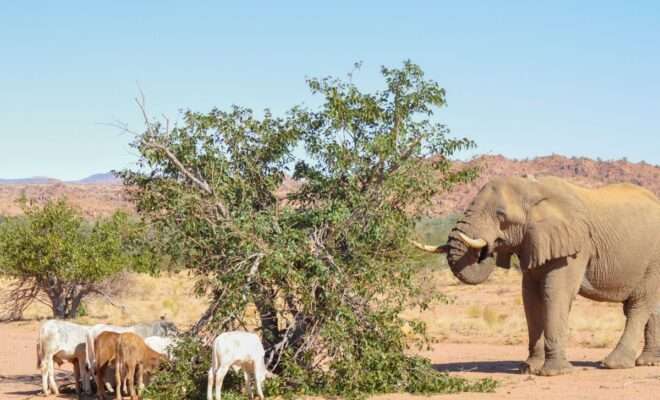
Similar approaches are being applied in arid northern Namibia, where geofencing, non-lethal deterrents and shared water management are easing tensions in some of the region’s most fragile farming landscapes.
The lesson is increasingly clear: coexistence works when farmers see tangible benefits. As land pressure intensifies across Southern Africa, aligning conservation with rural incomes may be the most effective path to reducing conflict—without sacrificing either livelihoods or wildlife.