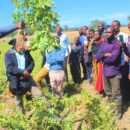

The Rise of Women in Nigeria’s Agricultural Revolution

Available in

Across Nigeria, a quiet but powerful transformation is unfolding in the agricultural sector as more women step into roles traditionally dominated by men. From poultry farming to crop production and agribusiness, women—many of them educated and entrepreneurial—are not only participating but excelling, reshaping the future of agriculture in the country.
For many, the journey into agriculture began out of necessity. Faced with limited employment opportunities and economic uncertainty, women turned to farming as a means of survival. Over time, what started as a coping mechanism has evolved into sustainable and profitable enterprises. Today, these ventures are not only supporting households but also inspiring a new generation to see agriculture as a viable and rewarding career path.
In regions like Yobe State, women have demonstrated remarkable resilience, particularly those affected by conflict and displacement. By embracing farming and poultry production, they have rebuilt their livelihoods and restored a sense of stability and purpose. Agriculture has become more than just an income source—it is a pathway to dignity, independence, and long-term security.

As these enterprises grow, so does their impact. Income generated from farming is helping women support their families, invest in education, and diversify into other small businesses. The ripple effects are being felt across communities, contributing to poverty reduction and broader economic development.
One of the most notable shifts is taking place in commercial poultry farming, where women are increasingly taking the lead. Once considered a male-dominated field, poultry farming is now seeing strong female participation, with many women running successful operations and challenging long-held perceptions about gender roles in agriculture.
Their influence extends beyond personal success. Many women-led farms are creating employment opportunities, hiring workers for both crop and livestock production, and strengthening local economies. In doing so, they are becoming key drivers of inclusive growth within the agricultural value chain.
Prominent figures such as Ndidi Okonkwo Nwuneli, Mary Afan, Fatima Abubakar, Nkiruka Jane Frances, and Adenike Ogunlesi exemplify this transformation. Through their work in agribusiness, advocacy, and training, they continue to empower other women and strengthen agricultural value chains across the country.
Despite this progress, significant challenges remain. Many women still face barriers such as limited access to finance, modern equipment, and quality inputs. These constraints continue to restrict the scale and sustainability of their operations, highlighting the need for more targeted support.
There is a clear role for government and development partners to strengthen this momentum by providing access to funding, farming equipment, inputs, and training programmes. With the right support systems in place, women in agriculture can significantly expand their impact and contribute even more to national development.
The rise of women in Nigeria’s agricultural sector is a story of resilience, innovation, and transformation. As more women step into leadership roles within the industry, they are not only feeding the nation but also redefining its economic future.