NAMPO Highlights Optimism and Growing Risks in South Africa’s Agriculture Sector

Available in

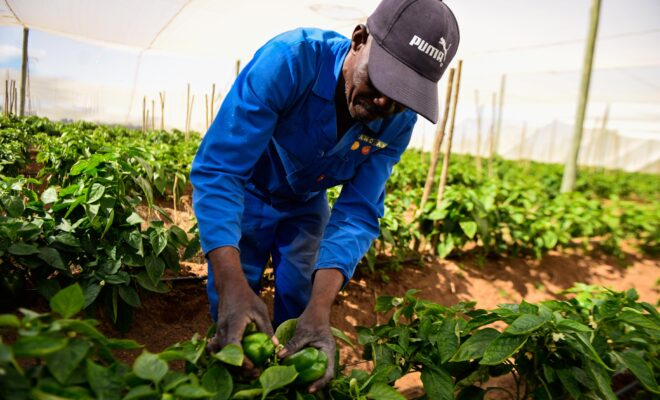
Image: BMG at Nampo 2026
South Africa’s agricultural sector is showing signs of resilience and cautious optimism in 2026, although mounting concerns around animal disease outbreaks, logistics failures and rising geopolitical risks continue to weigh heavily on the industry’s long-term outlook.
This was the view shared by Wandile Sihlobo following the recent NAMPO Harvest Day exhibition held in Bothaville.

According to Sihlobo, the event reflected a generally positive mood across much of the farming sector, despite growing recognition of the serious structural and operational challenges facing South African agriculture.
Disease outbreaks pressure livestock industries
Sihlobo noted that outbreaks of Foot-and-Mouth Disease in the beef and dairy industries, along with African swine fever affecting pork producers, remain among the most pressing concerns for livestock farmers.
These animal health challenges continue threatening production, trade access and profitability within key agricultural subsectors.
Despite the livestock difficulties, crop and horticultural industries are benefiting from favourable production conditions.
South Africa’s 2025/26 summer grain and oilseed harvest is currently estimated at approximately 20.8 million tonnes, representing a modest increase from the previous year.
Fruit exporters have also reported relatively strong performance, with the table grape industry achieving export growth despite operational disruptions at ports.
Logistics and infrastructure failures remain major obstacle
Infrastructure inefficiencies continue placing significant strain on farmers and agribusinesses, particularly exporters dependent on reliable transport systems.
Sihlobo pointed to deteriorating roads, poorly managed municipalities and logistics bottlenecks as major concerns affecting agricultural competitiveness.
The Port of Cape Town remained under pressure throughout late 2025 and into 2026, creating serious delays for exporters, especially within the table grape sector.
According to industry figures, inspected table grape export volumes reached 81.25 million cartons during the 2025/26 season, marking a 3% increase year-on-year despite logistics disruptions.
Some producers were reportedly forced to reroute exports through ports located far from production areas, significantly increasing transport costs and operational complexity.
Agricultural exports reach record levels
Despite the infrastructure challenges, South Africa’s agricultural exports reached a record US$15.1 billion in 2025, representing growth of approximately 10% compared to the previous year.
Sihlobo said cooperation between Transnet, organised agriculture and private-sector stakeholders has started improving logistics coordination and port operations in certain regions.
Ports in Durban and the Eastern Cape have shown signs of operational improvement, although infrastructure constraints remain a major concern for exporters.
Poultry, horticulture and grains show stronger performance
Outside the livestock industries, several agricultural subsectors entered 2026 on a stronger footing.
Horticulture, wine, vegetables and poultry production have all shown relatively positive momentum, supported partly by lower feed prices linked to improved maize and soybean supplies.
Sihlobo said the poultry sector in particular benefited from reduced grain costs during the early part of the year.
Rising geopolitical and climate risks threaten 2027 outlook
While 2026 may deliver mixed but generally stable agricultural growth, Sihlobo warned that emerging global risks could create more difficult conditions from 2027 onward.
Escalating tensions in the Middle East are already raising concerns over higher fuel and fertiliser prices, which could significantly increase production costs for farmers.
At the same time, forecasts pointing to a possible El Niño weather cycle are increasing fears of drought risks across Southern Africa.
Sihlobo noted that the grain sector’s next summer planting season beginning in October 2026 could coincide with rising input costs and worsening climate uncertainty, factors likely to influence agricultural performance well into 2027 and 2028.