
Mozambique Seeks Greater Access to Climate Finance to Expand Irrigation
Available in

Mozambique is appealing to international development partners to help unlock climate finance that will enable the country to expand irrigation infrastructure and build a more resilient agricultural sector in the face of increasing climate-related challenges.
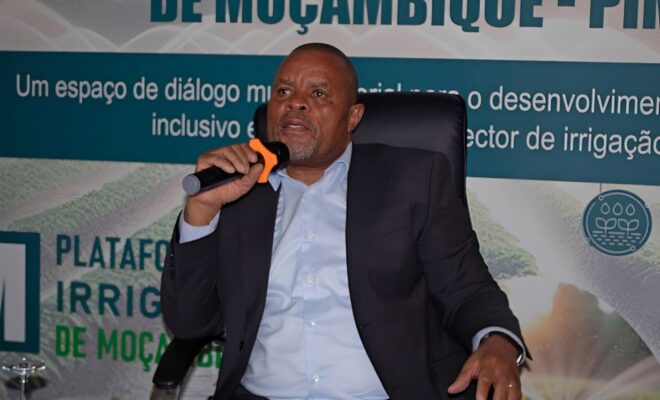
Agriculture Minister Roberto Albino made the call during the launch of the Mozambique Irrigation Platform in Maputo, where he stressed that limited access to international climate funding continues to hamper efforts to modernise irrigation systems and reduce the country’s dependence on rainfall.
Albino said Mozambique needs greater support to access global climate finance mechanisms, describing existing funding opportunities as difficult to secure despite the country’s high vulnerability to climate change.

He noted that investment in irrigation is becoming increasingly important as prolonged droughts, irregular rainfall and other extreme weather events continue to affect agricultural production. Expanding irrigation, he said, will be essential to improving food security and ensuring more reliable crop production.
The minister also called for broader discussions on how future irrigation investments should be directed, including whether funding should prioritise smallholder farmers, commercial agriculture or a combination of both to maximise economic and social benefits.
According to Albino, developing irrigation infrastructure requires substantial financial resources, making it essential to establish financing models that encourage greater private sector participation while supporting long-term agricultural development.
He also raised concerns about delays in implementing donor-funded agricultural projects, urging development partners to accelerate project delivery so that farming communities can benefit more quickly from planned investments.
The newly launched Mozambique Irrigation Platform is intended to coordinate efforts to improve irrigation systems, strengthen climate resilience and increase food production through better infrastructure, improved access to finance, farmer support programmes and the adoption of modern agricultural technologies.
Mozambique is among the countries most exposed to the impacts of climate change, regularly experiencing severe floods, tropical cyclones and prolonged droughts that disrupt farming and threaten rural livelihoods.
Despite these challenges, the country’s agricultural sector recorded strong growth during the 2024/25 production season. According to the Ministry of Agriculture, total agricultural output increased by 15.7% to more than 352 million tonnes, compared with approximately 304 million tonnes produced during the previous season.
Government officials believe expanding irrigation will play a critical role in sustaining future production growth while helping farmers adapt to increasingly unpredictable weather patterns.
Photo: Jornal Moçambique