
Security Remains Key to Nigeria’s Agricultural and Livestock Transformation

Available in

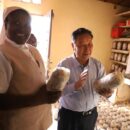
IMAGE: INNOCENT ODOH, Ambassador of The Netherlands to Nigeria.
Security remains one of the biggest obstacles to unlocking Nigeria’s agricultural and livestock potential, according to the Netherlands’ Ambassador to Nigeria, Bengt van Loosdrecht.
In an interview, van Loosdrecht said stronger security was essential for attracting long-term investment into farming, livestock production and agricultural value chains, while highlighting opportunities for greater cooperation between Nigeria and the Netherlands.

He said trade and investment remain central to the bilateral relationship, with Dutch companies having operated in Nigeria for decades. Companies including Heineken and FrieslandCampina/WAMCO have established long-standing operations in the country and contributed to the Nigerian economy.
The Netherlands remains an important destination for Nigerian exports, particularly oil and gas as well as agricultural commodities. In 2024, Nigeria recorded a trade surplus of €1.674 billion with the Netherlands, with Nigerian exports approaching €4 billion and Dutch exports to Nigeria exceeding €2 billion.
Van Loosdrecht said Nigeria’s oil exports to the Netherlands declined the following year as domestic refining capacity expanded, particularly with the Dangote refinery. He said Nigeria imported about €2.5 billion in goods from the Netherlands, compared with €3.8 billion previously, while Dutch exports to Nigeria stood at around €2.2 billion.
Beyond energy, the two countries are looking to deepen cooperation in agriculture, renewable energy, food processing and technology.
The ambassador said Nigeria has significant potential for renewable energy, particularly solar power, but investment remains limited by infrastructure challenges.
Through Dutch-supported programmes, companies are being connected with Nigerian businesses seeking solar solutions, including mini-grids and off-grid systems. The Netherlands is also providing access to grants and loans intended to encourage partnerships between Dutch technology providers and Nigerian companies.
Agriculture remains another major area of opportunity.
Van Loosdrecht said Nigerian commodities such as cocoa, sesame, sorghum, millet, soybeans, ginger and shea products have potential in European markets. The Netherlands’ Centre for the Promotion of Imports from Developing Countries, known as CBI, supports African exporters in meeting European Union market requirements.
He singled out Nigerian ginger as a particularly strong opportunity, describing its quality as competitive with supplies from other major producing countries.
The ambassador also pointed to opportunities to strengthen Nigeria’s agricultural value chains through improved seeds, technology and farmer training.
Tomato production was highlighted as one area where relatively simple changes could significantly reduce post-harvest losses. Van Loosdrecht said tomatoes are often transported in raffia baskets, resulting in substantial damage before the produce reaches markets.
He argued that the use of plastic crates could reduce compression and losses during transportation.
Dutch seed companies are also exploring opportunities to introduce improved hybrid varieties and provide farmers with the knowledge required to increase yields. Van Loosdrecht said these hybrid seeds are not genetically modified organisms, but varieties developed through conventional breeding to deliver improved characteristics.
Potato production in Plateau State is another area attracting Dutch interest. According to the ambassador, the state has potential for approximately 120,000 hectares of potato production, but yields remain constrained by limited varieties, farming techniques and access to improved inputs.
He said Dutch companies are exploring ways to increase yields from current levels of around 10 tonnes per hectare to between 20 and 40 tonnes per hectare through improved seed, irrigation, cultivation practices and harvesting techniques.
Higher domestic production could also help Nigeria reduce its reliance on imported potatoes used by the food-processing and fast-food industries.
However, the livestock sector presents a more difficult investment environment.
Van Loosdrecht said Dutch companies, including FrieslandCampina/WAMCO, have explored ways of developing cattle farming and improving the dairy value chain in Nigeria. Attempts to establish cattle farms and introduce improved breeding have faced significant challenges linked to insecurity.
He said previous investments and facilities connected to cattle and milk production had been damaged or destroyed, making it difficult for companies to maintain operations.
According to the ambassador, security concerns have therefore become a major factor limiting private-sector investment in livestock production.
Nigeria’s agricultural transformation will consequently require more than improved seeds, technology and finance. The experience of Dutch companies suggests that secure operating environments are also essential for attracting investment, protecting infrastructure and building sustainable agricultural value chains.
For Nigeria, strengthening security alongside agricultural infrastructure, farmer training, technology transfer and market access could help unlock greater production in crops, livestock and food processing while creating opportunities for deeper international investment.