

AGRA and Mastercard Foundation Launch $YEFFA Programme to Support 143,000 Nigerian Youth in Agribusiness
Available in

The Alliance for a Green Revolution in Africa (AGRA) and the Mastercard Foundation have launched a six-year initiative aimed at supporting 143,000 young Nigerians to access dignified and fulfilling employment across the country’s agricultural value chains.
The Youth Entrepreneurship for the Future of Food and Agriculture (YEFFA) programme is designed to expand youth participation in agribusiness, improve access to finance and markets, and strengthen entrepreneurship across Nigeria’s agrifood sector. Young women are expected to account for 70% of beneficiaries.
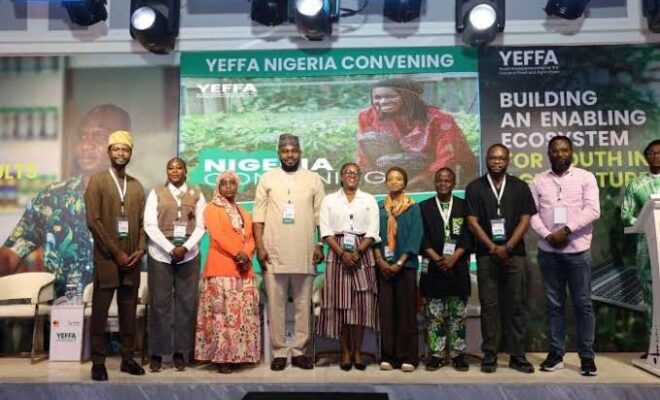
The programme was officially introduced during a two-day convening in Abuja on 7 and 8 October 2026, bringing together approximately 150 participants, including 100 young people, government representatives, private-sector leaders and development partners.

Discussions focused on barriers facing young entrepreneurs in agriculture and the interventions needed to help them establish and grow sustainable businesses.
YEFFA forms part of a broader Pan-African partnership operating in eight countries. In Nigeria, the initiative will cover the Federal Capital Territory and Niger, Nasarawa, Kaduna, Ogun and Oyo states, with activities targeting maize, rice, soybean, horticulture and aquaculture value chains.
Financing and Market Access Remain Major Challenges
Access to finance emerged as the leading concern among young agripreneurs participating in the Abuja discussions. A live digital poll found that 44% of respondents identified financing as their highest investment priority, followed by youth leadership and inclusion at 20%, and technology and innovation at 17%.
Participants also ranked mentorship and coaching ahead of affordable financing and practical skills training when asked which interventions would best support their businesses.
The findings highlight the multiple challenges facing young people seeking to enter or expand their involvement in agriculture, including limited capital, restricted market access and insufficient business development support.
Mastercard Foundation Nigeria Country Director Rosy Fynn said YEFFA was designed around challenges identified by young people themselves. She highlighted financing constraints, limited market access and post-harvest losses as issues the programme aims to address.
The Bank of Agriculture has also indicated its willingness to support the initiative financially. Its Managing Director and Chief Executive Officer, Ayodeji Oludare Sotinrin, said the bank financed more than 500,000 farmers in the previous year and pledged to collaborate with AGRA and the Mastercard Foundation on a dedicated financing mechanism for YEFFA participants.
Such a mechanism could help participating entrepreneurs access the capital required to establish businesses, purchase agricultural inputs, invest in equipment and expand their operations, although its detailed terms have yet to be outlined.
Government Calls for a Business-Oriented Approach to Agriculture
Nigeria’s Minister of State for Agriculture and Food Security, Senator Aliyu Sabi Abdullahi, formally launched the programme and encouraged young people to approach agriculture as a full-time business.
He urged aspiring agripreneurs to develop practical skills, seek mentorship from experienced farmers and explore opportunities across the agricultural value chain rather than concentrating exclusively on primary production.
Potential opportunities include food processing, cocoa, mushroom cultivation and agricultural exports, where businesses can create additional value and develop new sources of income.
Abdullahi also highlighted changes to agricultural training curricula requiring 70% of content to be devoted to practical learning, reflecting the importance of hands-on experience in preparing young people for commercial agricultural activities.
Youth Participation at the Centre of Programme Design
AGRA Nigeria Country Director Dr Rufus Idris said YEFFA was designed by young people for young people, with beneficiaries expected to play an active role in implementation.
He said the programme also sought to generate wider systemic improvements across Nigeria’s agricultural sector, extending benefits beyond its direct participants and partners.
Wambui Chege, Director of Agrifood Systems for Pan-African Programs at the Mastercard Foundation, said Nigeria could draw on lessons from the partnership’s implementation in other countries since 2023.
Representing youth perspectives at the launch, Baliqees Salaudeen, a 28-year-old agripreneur and regional coordinator of the African Youth Initiative on Climate Change, called for stronger youth involvement in decisions affecting the agricultural sector.
Her recommendations included reducing collateral requirements for financing, strengthening connections with buyers and processors, expanding access to affordable digital tools and ensuring the inclusion of young women, persons with disabilities and displaced young people.
Salaudeen also advocated establishing a youth advisory mechanism that would provide young people with regular access to programme decision-makers. She emphasised the importance of transparent implementation and practical business support.
Building Opportunities Across Nigeria’s Agrifood Sector
Nigeria’s large agricultural economy offers opportunities for young entrepreneurs in production, processing, logistics, technology and marketing. However, limited access to capital, reliable buyers and business development services can prevent promising enterprises from growing.
Through its six-year implementation period, YEFFA aims to help address these barriers while expanding opportunities for young people, particularly women, to participate in agribusiness.
The programme’s impact will depend on how effectively its partners translate the commitments announced at the launch into accessible financing, mentorship, market connections and practical skills development.
With 143,000 young people targeted, the initiative represents a significant effort to strengthen youth entrepreneurship and support the development of more inclusive agricultural value chains in Nigeria.


