
Youth-Led Farming Enterprises Gain Ground as Africa Searches for Jobs

Available in

With Africa’s working-age population expanding faster than any other region globally, agriculture is being reimagined—not as a sector of last resort, but as a platform for enterprise, innovation, and employment.
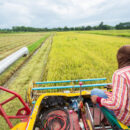
Across the continent, youth-led agribusinesses are gaining traction in horticulture, poultry, aquaculture, input distribution, mechanisation services, and food processing. Many are bypassing traditional farming models in favour of market-driven, technology-enabled approaches.
Technology Lowers Entry Barriers

Digital platforms are playing a central role in enabling youth participation. Mobile-based services now support:
- Mechanisation hire and shared equipment access
- Digital input vouchers and extension advice
- Produce aggregation and market linkage
- Climate and price information services
These tools reduce upfront capital requirements and allow young entrepreneurs to enter agriculture without owning large tracts of land.
Finance Remains the Main Constraint
Despite innovation, access to finance remains the single biggest obstacle. Most young farmers lack land titles or collateral, making them unattractive to conventional lenders.
While youth-focused funds, accelerators, and grant programmes have expanded in recent years, coverage remains limited relative to demand. Analysts warn that pilot programmes alone will not absorb Africa’s youth bulge.
What Will Drive Scale
For youth-led agriculture to scale meaningfully, policies must align across four areas:
- Finance – blended finance, risk-sharing, and patient capital
- Skills – business, agronomy, and digital literacy
- Land – flexible access models and secure tenure arrangements
- Markets – guaranteed offtake and aggregation models
Without coordinated reform, youth engagement in agriculture risks remaining fragmented rather than transformative.