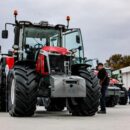

NAMPO 2026 to Spotlight Innovation and Resilience as Pressure Mounts on African Agriculture

Available in

Image: Bridgestone_NAMPO_2025
Africa’s largest agricultural exhibition, the NAMPO Harvest Day 2026, will place resilience and innovation at the centre of its agenda as farmers face rising climate, cost, and market pressures across the continent.
Hosted by Grain SA, the event will take place from 12 to 15 May 2026 at NAMPO Park in Bothaville, bringing together producers, agribusinesses, researchers and policymakers at a time when agriculture is under increasing strain.

The 2026 theme, “Resilience through Innovation,” reflects a shift in how the sector is responding to mounting challenges. Farmers are no longer focused solely on survival, but on adapting operations, improving efficiency, and maintaining profitability in a volatile environment.
Across Africa, producers are grappling with climate variability, rising input costs, pest and disease pressures, and policy uncertainty. These factors are tightening margins and forcing a rethink of traditional farming models. At NAMPO 2026, innovation is positioned as the key enabler of resilience — from precision agriculture and mechanisation to improved genetics and data-driven decision-making.
The exhibition remains a critical platform for connecting the agricultural value chain, offering a space where practical solutions can be demonstrated and adopted at scale. Technology will be a major focus, with advancements in automation, digital tools, and smart farming systems expected to feature prominently.
Importantly, the event comes at a time when African agriculture is under pressure to produce more with fewer resources. As population growth accelerates and climate risks intensify, improving productivity while safeguarding sustainability has become a central priority.
NAMPO’s role extends beyond showcasing equipment and products. It facilitates knowledge exchange, collaboration and access to solutions that can help farmers navigate an increasingly complex operating environment.
For South Africa and the wider continent, the message is clear: resilience is no longer optional. It is becoming the defining factor for long-term agricultural competitiveness, with innovation acting as the bridge between survival and sustainable growth.