
Kenyan Engineer Builds Profitable Goat Farming Business in Kisumu
Available in

An electrical engineer in Kenya has transformed a small urban plot into a thriving goat farming enterprise, demonstrating how livestock farming is creating income, jobs and food security opportunities across the country.
As Kenya continues to promote livestock production under its Bottom-Up Economic Transformation Agenda (BETA), more professionals are investing in commercial farming to diversify their incomes and tap into growing demand for meat and dairy products.
One such entrepreneur is Kevin Omondi, an electrical engineer based in Kisumu, who has successfully developed a commercial goat farming business while maintaining his engineering career.

His venture illustrates the growing potential of climate-smart livestock farming as an attractive agribusiness opportunity for urban and peri-urban farmers.
From Engineering to Commercial Goat Farming
Omondi began his goat farming journey in 2019 with just four goats producing about nine litres of milk per day.
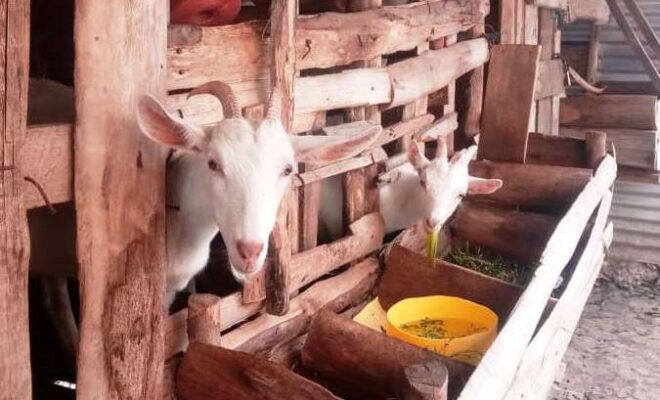
Today, he manages a herd of approximately 150 goats on slightly more than half an acre of land in Nyamasaria, Kisumu, while employing two workers to help run the enterprise.
The farm has grown into a sustainable business supplying goat milk to hotels, retailers and individual consumers seeking healthier dairy alternatives.
According to Omondi, the expansion demonstrates that commercial livestock farming can be profitable even on relatively small parcels of land when supported by good management practices.
Climate-Smart Livestock Offers New Opportunities
Goat farming is gaining popularity in Kenya because goats require less space and fewer resources than many other livestock while adapting well to changing climatic conditions.
Omondi has invested in crossbreeding Saanen and Galla goats to improve milk production while maintaining resilience to local environmental conditions.
Improved breeding programmes are enabling farmers to raise animals that mature faster, produce more milk and command better market prices, making goat farming an increasingly viable commercial enterprise.
The sector is also benefiting from growing demand for goat meat (chevon) and dairy products as consumers seek alternative protein sources.
Growing Demand for Goat Milk
Omondi’s herd produces more than 200 litres of goat milk daily, supplying regular customers including hotels and households.
Goat milk continues to attract consumers due to its nutritional value, digestibility and suitability for individuals with certain dairy sensitivities.
The expanding market is creating opportunities for value addition through products such as yoghurt, cheese and other dairy products, offering farmers additional revenue streams.
Livestock Sector Drives Kenya’s Agricultural Economy
Livestock remains one of the most important contributors to Kenya’s agricultural sector.
According to government data, the livestock industry contributes approximately 12% of Kenya’s Gross Domestic Product (GDP) and around 42% of agricultural GDP, while employing nearly half of the agricultural workforce.
The government’s BETA programme aims to increase the sector’s economic contribution from KSh390 billion to KSh1 trillion by expanding dairy, meat and leather value chains while increasing agricultural exports.
Rising demand for meat and dairy products, driven by population growth and urbanisation, is expected to create further investment opportunities across Kenya’s livestock industry.
Goat Farming Supporting Rural Incomes
Beyond commercial production, goat farming is improving livelihoods for thousands of smallholder farmers, particularly women and youth.
The relatively low capital requirements and high reproductive rates make goats an attractive investment for households seeking to diversify income and strengthen food security.
In Kisumu, farmers are increasingly forming cooperatives and self-help groups to improve market access, share production knowledge and invest in value-added processing.
As Kenya works to modernise its livestock sector, successful entrepreneurs such as Kevin Omondi demonstrate how innovation, improved breeds and commercial farming practices can transform small-scale livestock production into sustainable agribusinesses that generate employment, improve nutrition and contribute to national economic growth.