
Prof Dzanja Says Malawi’s Agriculture Is “Broken”, Calls for Five-Point Reform

Available in

Newly appointed Professor Joseph Dzanja of the Lilongwe University of Agriculture and Natural Resources (LUANAR) has called for major investment in Malawi’s agricultural marketing systems, arguing that fixing the country’s market structures is essential to unlocking the sector’s full potential.
Professor Dzanja made the remarks on Thursday during his inaugural lecture at LUANAR, where he challenged policymakers, researchers and other agricultural stakeholders to rethink how farming and agricultural markets are organised and supported in Malawi.
At the centre of his argument was the view that Malawi’s agricultural challenges extend beyond production.

He said weaknesses in the systems connecting farmers with markets, consumers, processors, financial institutions and other actors across the agricultural value chain are limiting the sector’s performance.
Malawi’s agricultural market system faces five major gaps
According to Dzanja, Malawi’s agricultural market system is fragmented across five major dimensions: information, coordination, space, time and power.
1. Limited access to market information
Dzanja said farmers and other market participants often lack timely and reliable information about prices, demand and available market opportunities.
“This limits their ability to make informed production and marketing decisions,” he said.
Without reliable market information, farmers can struggle to determine what to produce, when to sell and which markets offer the best opportunities.
2. Weak coordination among farmers
The second challenge is poor coordination among producers and other actors in agricultural value chains.
Dzanja said limited collective action can weaken farmers’ bargaining power and prevent them from benefiting from economies of scale when purchasing inputs or marketing their produce.
Stronger farmer organisations, he argued, could help producers negotiate better terms and participate more effectively in markets.
3. The rural-urban market divide
Dzanja identified geographical distance as another major constraint facing Malawi’s farmers.
Many producers operate far from major markets, processors and consumers, creating what he described as a rural-urban disconnect.
Weak connections between production areas and commercial centres can increase marketing costs and make it more difficult for farmers to access profitable markets.
4. Seasonality and market volatility
The fourth challenge relates to time.
Agricultural production is highly seasonal, while markets can be slow to adjust to changes in supply and demand. This can result in large surpluses immediately after harvest and shortages later in the year.
The imbalance contributes to price volatility and post-harvest losses, potentially reducing farmers’ incomes even when production is relatively strong.
5. Unequal power across the value chain
Dzanja said power is another critical weakness within Malawi’s agricultural markets.
“Differences in access to information, finance, infrastructure and bargaining power can leave smallholder farmers in a weaker position when negotiating with other participants in the value chain,” he said.
Smallholder farmers may therefore have limited influence over prices and trading conditions compared with better-resourced actors within the agricultural value chain.
Prof Dzanja proposes a five-point agricultural fix
To address these challenges, Dzanja called for Malawi to adopt what he described as a “coordinated systems market perspective.”
Under this approach, agricultural development would move beyond a narrow focus on farmers and production to consider the entire market system and the relationships linking producers, traders, processors, financial institutions, consumers, government and other stakeholders.
He outlined five priority areas for Malawi:
- Invest in agro-processing and storage to reduce post-harvest losses and create more opportunities for value addition.
- Strengthen farmer organisations so producers can improve their bargaining power and benefit from collective action.
- Expand affordable finance and insurance to give farmers and agricultural businesses greater access to capital while reducing production and market risks.
- Improve rural infrastructure and logistics to strengthen links between farmers, processors and markets.
Harness digital platforms to improve access to market information and connect agricultural producers with other participants across the value chain.
Rethinking agricultural markets
Dzanja’s inaugural lecture places agricultural marketing at the centre of Malawi’s efforts to transform the sector.
His argument suggests that increasing production alone will not be enough to deliver sustainable improvements in agricultural incomes and food systems unless farmers can efficiently access markets and secure better returns.
Strengthening the connections between farmers, markets, finance, infrastructure, technology and processors could therefore play a critical role in making Malawi’s agricultural sector more productive and commercially sustainable.
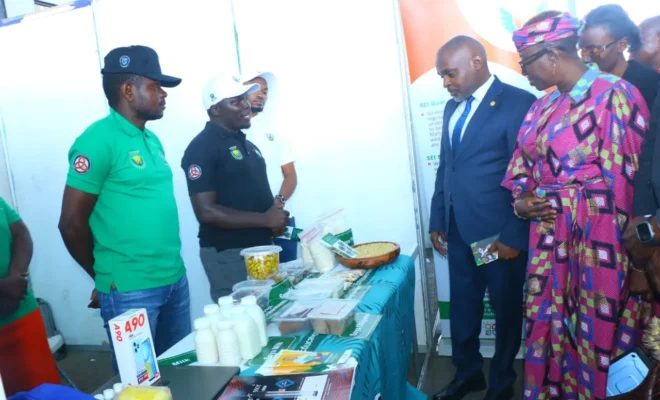
Image: Prof Dzanja urges rethink of agricultural marketing in inaugural lecture