Uganda Targets 10,000 Tractors in Five-Year Push to Modernise Agriculture
Available in

Uganda’s government plans to make mechanised agriculture a central priority over the next five years, targeting the deployment of 10,000 tractors to increase farm productivity, expand cultivated land and strengthen rural economic development.
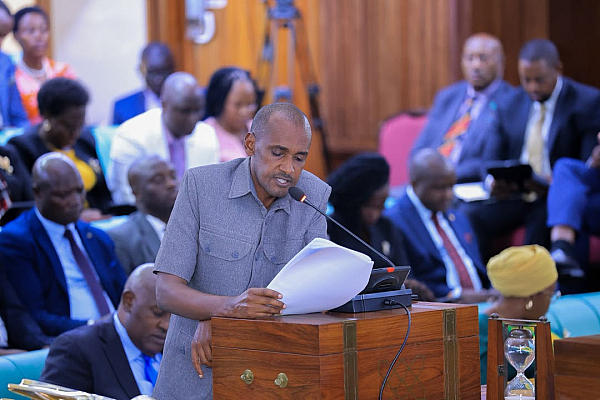
Minister of Agriculture, Animal Industry and Fisheries Frank Tumwebaze announced the plans while presenting a statement on the performance of the agriculture sector to Parliament on Wednesday, 21 October 2026.
Tumwebaze said Uganda’s agricultural productivity continued to be constrained by dependence on manual labour and unpredictable weather patterns. He said mechanisation would enable farmers to cultivate larger areas more efficiently, support value addition and create employment opportunities across agricultural services and related businesses.

The government’s strategy proposes establishing and operationalising 21 agricultural mechanisation centres, alongside a cost-sharing model for tractor acquisition involving the government, commercial farmers and producer groups. The approach is intended to make agricultural machinery more accessible and affordable for farmers.
Since 2018, the government has acquired and deployed 1,080 tractors with matching implements, as well as 1,350 single-axle walk-behind tractors equipped with various accessories. The equipment is allocated to farmers, farmer groups, associations and institutions through agreements with the agriculture ministry.
To support the effective use of the machinery, 2,036 tractor operators and technicians have also been trained at the Namalere Mechanisation Centre and deployed across the country.
Irrigation to Strengthen Agricultural Resilience
Alongside mechanisation, Uganda is prioritising irrigation to reduce the sector’s dependence on rainfall and improve the reliability of agricultural production.
Tumwebaze said the agriculture ministry, working with the Ministry of Water and Environment, had submitted a National Irrigation Development Plan to the Ministry of Finance for funding under the proposed National Irrigation Development Project. The initiative is intended to cover the country and support food security, income generation and sustainable commercial farming.
The two ministries have completed 10 large-scale irrigation schemes, expanding the country’s formal irrigation area by 7,203 hectares. Completed projects include the Doho II rice irrigation scheme in Butaleja, Ngenge in Kween and Mubuku II in Kasese.
Other schemes under construction include Kabuyanda in Isingiro, Namaitsu in Bududa and Chembobai in Bukwo.
Expanded irrigation is expected to help farmers manage increasingly unpredictable weather conditions, improve production consistency and create opportunities for commercial farming throughout the year.
Agricultural Financing and Economic Contribution
The minister also highlighted the Parish Development Model (PDM), which aims to strengthen household incomes and improve financial inclusion, particularly among smallholder farmers.
According to Tumwebaze, the government has cumulatively injected Shs4.4 trillion into parish savings and credit cooperative organisations (SACCOs) since the programme began five years ago.
For medium- and large-scale farmers who fall outside the PDM framework, the government intends to continue implementing support measures under its Agriculture Value Chain Development Strategy.
The sector’s economic contribution has also increased. Tumwebaze reported that agriculture’s share of Uganda’s gross domestic product rose from a 10-year average of 23% to 26.2% in the 2025/2026 financial year. Agriculture also accounted for an average of 40% of the country’s export earnings.
The government’s five-year agenda places mechanisation, irrigation, agricultural financing and value-chain development at the centre of efforts to raise productivity and strengthen rural livelihoods. Its success will depend on the implementation of planned investments and farmers’ ability to access machinery, irrigation infrastructure and suitable financing.