

Kenya’s Agricultural Calendar Linked to Predictable Seasonal Patterns of Rural Protests, Study Finds
Available in

Protests in Kenya’s agricultural communities follow a predictable seasonal pattern, increasing two to three months after harvest as rural households face declining food stocks, financial pressures and the costs of preparing for the next planting season, according to new research.
A study examining agricultural cycles and protest activity between 2000 and 2019 found that demonstrations in agrarian areas were concentrated around the beginning of new growing seasons, highlighting the relationship between farming conditions, household finances and social unrest.
The research, conducted by economics PhD student Nicole Robiro and behavioural economics researcher Sophia Seelos, combined satellite-based vegetation data with records from the Armed Conflict Location and Events Dataset (ACLED) to examine how agricultural seasons influence protest activity.

The findings suggest that understanding local farming calendars could help governments, humanitarian organisations and development partners anticipate periods of heightened social unrest and provide targeted support to vulnerable rural households.
Harvest cycles influence protest activity
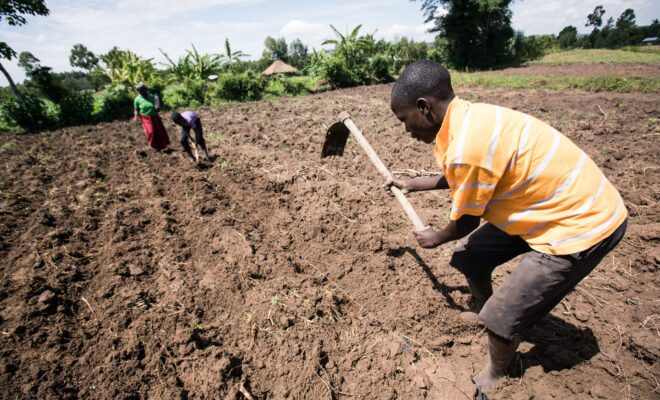
Agriculture remains a major source of employment and income for smallholder households in Kenya. Farming activities, including planting, crop management and harvesting, determine household labour demands, food availability and income throughout the year.
However, farmers frequently face challenges such as low commodity prices, delayed payments, land disputes, competition from cheaper imports and inadequate infrastructure, particularly in the sugar, tea and coffee sectors.
Although these grievances often originate in rural communities, protests frequently target institutions and businesses responsible for governing agricultural value chains. Demonstrations may take place outside factories, along major roads or at county government offices.
The study estimates that agrarian-related demonstrations accounted for approximately 7% of all protests recorded in Kenya over the past two decades.
Researchers found that protest activity generally increased two to three months after harvesting, coinciding with the period when households begin experiencing declining food reserves and preparing financially for another planting season.
Financial pressures increase during the lean season
The researchers identified two major factors that help explain the seasonal pattern.
The first is the opportunity cost of participating in protests. During labour-intensive farming periods, particularly planting and harvesting, farmers have less time to participate in demonstrations because their attention is focused on agricultural activities.
The second factor is economic hardship. Following harvest, households initially benefit from food stocks and income generated through crop sales. However, these resources gradually decline as the next growing season approaches.
Farmers must also purchase seeds, fertiliser and other agricultural inputs before receiving income from their next harvest. Many households delay these purchases until shortly before planting because of limited cash availability.
This combination of declining food reserves, financial constraints and rising production costs creates additional pressure on rural households, potentially increasing the likelihood of protests.
Satellite data provides insights into agricultural unrest
To investigate the relationship between farming seasons and demonstrations, the researchers analysed two datasets covering Kenya between 2000 and 2019.
Satellite-based vegetation measurements were used to track changes in plant greenness and establish crop development and harvesting periods.
These findings were combined with ACLED records, which provide geographical information on conflict and protest events.
The approach enabled researchers to identify harvesting periods at ward level, providing a more locally specific understanding of agricultural calendars across Kenya’s diverse agro-ecological regions.
The analysis also accounted for differences in agricultural seasons between locations and broader economic and political developments. Election-related protest waves were excluded to minimise their influence on the findings.
Findings offer opportunities for early intervention
The research highlights the importance of incorporating agricultural calendars into conflict early-warning systems.
Existing systems frequently monitor commodity prices, extreme weather events and political developments to identify potential sources of instability. However, the study suggests that predictable changes in household income and food availability throughout the farming year should also be considered.
Governments and development organisations could use locally specific agricultural calendars to identify periods when rural households are most vulnerable to economic pressures.
Social protection programmes, food assistance and public works initiatives could then be scheduled to provide support between the depletion of harvest stocks and the beginning of the next growing season.
For agricultural policymakers, the findings also reinforce the importance of addressing persistent challenges affecting smallholder productivity, including access to affordable inputs, reliable markets and timely payments.
The researchers argue that understanding the timing of economic hardship can help governments move beyond responding to unrest after it occurs towards anticipating and addressing the conditions that contribute to it.
The study also demonstrates how satellite technology can provide valuable agricultural and socioeconomic information in areas where detailed household income and food security surveys are limited.
Ultimately, understanding the relationship between agricultural production cycles and rural livelihoods could help strengthen food security interventions, improve rural economic stability and reduce the risk of seasonal unrest.


