
NALDA Develops Solar-Powered Farm Estates to Advance Climate-smart Agriculture in Nigeria
Available in

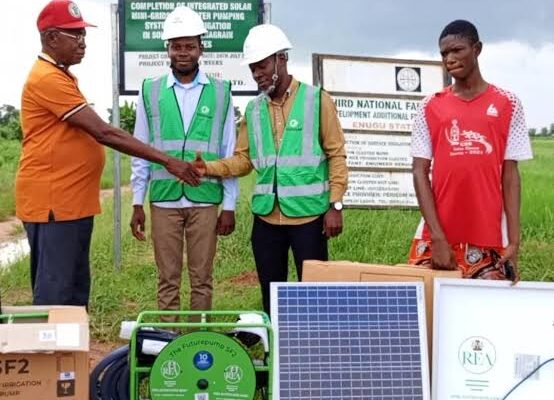
Nigeria’s National Agricultural Land Development Authority (NALDA) is developing clean-energy farm estates incorporating solar-powered irrigation, electric tractors and low-emission agricultural machinery to strengthen climate resilience and improve food production.
The initiative aims to reduce farmers’ dependence on seasonal rainfall, support year-round cultivation and create opportunities to access international carbon-credit financing.
NALDA Executive Secretary and Chief Executive Officer Cornelius Adebayo announced the programme on Tuesday during the 2026 United Nations Climate Change Conference in Antalya, Türkiye, where he participated in a panel discussion on green industrialisation and critical energy security.

Adebayo said the authority’s zero-emission agricultural model would use electric bulldozers for land clearing, electric tractors for soil preparation and solar-powered water delivery systems to support more sustainable farming practices.
He noted that changing rainfall patterns and increasingly unpredictable wet seasons had made the shift from rain-fed agriculture to structured irrigation systems increasingly important.
Under the proposed model, farmers and investors will access irrigation services through private investment partnerships, with fees charged per hectare.
NALDA is also engaging development finance institutions, including the Bank of Industry, to secure concessional financing to help overcome the high initial costs of acquiring clean-energy agricultural equipment.
The authority is expanding its anchor-borrower framework, through which commercial partners provide land, seeds, agricultural inputs and mechanisation services. These partners also take on crop-failure risks and purchase harvested produce directly from participating smallholder farmers.
The proposed farm estates will include rural security infrastructure such as surveillance drones and dedicated security outposts, as well as residential housing, solar mini-grids and clean drinking water. These facilities are intended to make agricultural communities more attractive to young people.
NALDA expands environmental restoration through Green Hope Project
Separately, NALDA Special Adviser on Projects Al-Mustapha Ibrahim presented the agency’s Green Hope Project during a technical session at the Nigerian Pavilion.
The project combines environmental restoration with commercial horticulture and has mobilised more than 400 volunteers across Ogun, Plateau and Kwara states, as well as the Federal Capital Territory.
Approximately 5,000 economic trees, including mango, avocado and coconut, have been planted across 50 hectares of perimeter-fenced land. The programme is being implemented in partnership with the National Horticultural Research Institute and the National Council on Climate Change.
Opportunities for agricultural investment
NALDA’s clean-energy farm estates could create opportunities for businesses involved in renewable energy, irrigation, agricultural machinery, food processing and equipment maintenance.
Solar-powered irrigation could help farmers reduce their exposure to seasonal rainfall disruptions, potentially extending production periods and improving agricultural output. The initiative could also stimulate demand for solar equipment suppliers, electric tractor distributors and technical maintenance providers.
The proposed low-emission farming model may offer another financing avenue through carbon-credit markets. However, access to carbon-credit revenue will depend on independently verified emissions reductions, recognised certification and compliance with applicable market requirements.
The anchor-borrower framework could also improve market access for smallholder farmers by connecting them with commercial partners that provide inputs, mechanisation and guaranteed buyers.
While the specific financing terms and eligibility requirements have not yet been announced, NALDA’s engagement with institutions such as the Bank of Industry could help support investment in clean-energy agricultural technologies.
The programme reflects Nigeria’s efforts to link agricultural development with renewable energy, climate financing and private-sector investment while building more resilient farming systems.