
Tag: AFDB
-
African Development Bank, African Union, United States Government, International Fund for Agricultural Development, CGIAR advance ties to boost Africa’s food production
Top development organisations have pledged to forge partnerships to expand the Vision for Adapted Crops and Soils (VACS), an initiative aimed at building resilient African food systems based on diverse, nutritious, and climate-adapted crops grown in healthy soils. On the sidelines of the African Fertilizer and Soil Health Summit in Nairobi, the African Union’s Commissioner ... -
Zambia: AfDB Targets FDI in Infrastructure, Agriculture
The African Development Bank (AfDB) has identified infrastructure development and the agricultural value chain as two investment priorities to support Zambia’s economic growth. The findings were outlined by the AfDB’s Board of Directors in the Bank’s latest Country Strategy Paper for Zambia for 2024-2029. “The first area emphasizes infrastructure development with the aim of increasing productivity, strengthening ... -
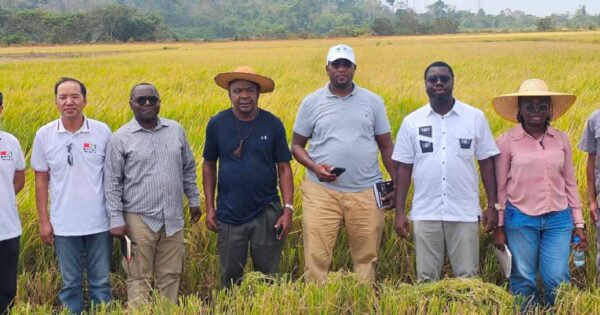
The Guiguidou Hydro-Agricultural Rice Project Showcases Agricultural Cooperation between the African Development Bank and China
Given the key role sustainable agricultural development will play in Africa’s future, the African Development Bank has embarked on a groundbreaking partnership aimed at transforming agricultural practices across the continent. On 29 November 2021, a landmark Memorandum of Understanding (MOU) was signed between the African Development Bank, the Ministry of Agriculture and Rural Affairs of ... -
The African Development Bank’s annual portfolio review of Global Agriculture for Food Security Program (GAFSP)
Workshop participants. Seated in the front row, Demba Sabally, Ministry of Agriculture (sixth from L), Mod Seck, Ministry of Agriculture PS ( fifth from L) Malick Ndiaye, WFP Deputy Director (2nd from R), AfDB’s Philip Boahen (4th from R). At the Sir Dawda Kairaba Jawara International Conference Center in Banjul, The Gambia, 50 participants attended ... -
AfDB supports Nigeria with $134m to cultivate rice, maize, cassava, soyabeans
AfDB president, Akinwunmi Adesina The African Development Bank (AfDB) is supporting Nigeria in the cultivation of rice, maize, cassava and soyabeans to boost food production. The bank is providing $134 million to achieve this, its president, Dr Akinwunmi Adesina, said on Saturday, February 2, 2024, after visiting the Centre for Dryland Agriculture (CDA) at Bayero ... -
AfDB training in climate-smart agriculture
A number of young people from southern Africa will be given training in the role of technology in the development of agricultural practices. The virtual training course opens on 27 September in the South African city of Johannesburg. There is no longer any doubt about the urgent need for climate-smart agriculture in southern Africa. Recognising ... -
COP27 – Climate Investment Funds Announces Nine Countries to Participate in the First Nature, People and Climate Platform
Vice president Beth Dunford (at right) and other participants at a Climate Investment Funds event during COP27 The Climate Investment Funds (CIF) will extend $350 million in financing and other support for nature-based solutions in nine countries under its Nature, People and Climate Investment platform. The beneficiary countries are: the Dominican Republic, Egypt, Fiji, Kenya, ... -
Liberia: African Development Bank Group approves $5.12 million financing for Emergency Food Production Program
The Board of directors of the African Development Bank Group has approved financing for the Emergency Food Production Program in Liberia. This paves the way for the government to support farmers as they increase climate resilient food production and mitigate the impact of the ongoing war in Ukraine. The funding includes a grant of $2.28 million ... -
EAC Should Modernise Agriculture Sector
The African Development Bank (AfDB) says agricultural and industrialisation are the key areas for the East African Community (EAC) development. Yes! The development lender backs its predication on the fact that the region’s between 75 percent and 90 percent of its population depends on agricultural activities. The argument based on the fact that if agriculture ...