
ECOWAS Launches Landmark Regional Projects to Strengthen Agriculture and Livestock Systems

Available in

The Economic Community of West African States (ECOWAS) has unveiled two major regional initiatives aimed at reinforcing agricultural resilience and livestock development across West Africa, marking a significant step in the bloc’s drive toward food security and economic integration.
At a high-level ceremony in Abuja on 4 December 2025, ECOWAS Commission President H.E. Dr Omar Alieu Touray signed a financing agreement with the French Republic for the second phase of the Regional Project to Strengthen a Platform of Solutions in Support of Pastoralism and Livestock Farming in West Africa (PEPISAO II). He also formally inaugurated the West Africa Milk Offensive Support Project (PAOLAO).
The event drew diplomats, member state representatives, and senior ECOWAS officials, underscoring the region’s collective commitment to advancing sustainable agriculture, improving pastoral systems, and expanding inclusive economic opportunities.

Strategic Focus of the Initiatives
• PEPISAO II: Designed to enhance governance in pastoral systems, the project will promote cross-border conflict mitigation, strengthen mobility frameworks, and reinforce social cohesion in pastoral communities. These measures are seen as critical to regional stability and resilience.
• PAOLAO: Targeted at boosting local milk production, the initiative will develop the dairy value chain, reduce reliance on imported dairy products, and foster new employment and entrepreneurship opportunities for farmers, herders, youth, and women.
Voices from ECOWAS Leadership
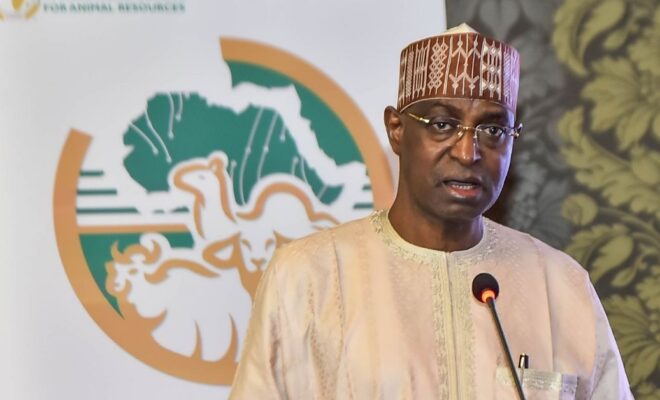
Speaking at the ceremony, ECOWAS Commissioner for Economic Affairs and Agriculture, Dr Kalilou Sylla, described the projects as transformative interventions aligned with ECOWAS’s long-term vision of a resilient, prosperous, and integrated West Africa.
“These initiatives are not just about agriculture,” Dr Sylla noted. “They are about livelihoods, stability, and regional competitiveness. By strengthening pastoral systems and building a robust dairy industry, we are investing in the future of our communities and economies.”
International Partnership
The collaboration with the French Republic highlights the importance of coordinated international support in driving sustainable agricultural transformation across the sub-region. ECOWAS leaders emphasized that such partnerships are essential to scaling impact and ensuring that targeted interventions translate into measurable improvements in livelihoods and regional economic performance.