
Oyo State Expands Sustainable Agriculture Programme to Boost Food Security and Farmer Productivity

Available in

The Oyo State Government has reaffirmed its commitment to strengthening food security and promoting sustainable agriculture through expanded partnerships aimed at improving productivity, supporting farmers and increasing the adoption of climate-resilient farming practices.
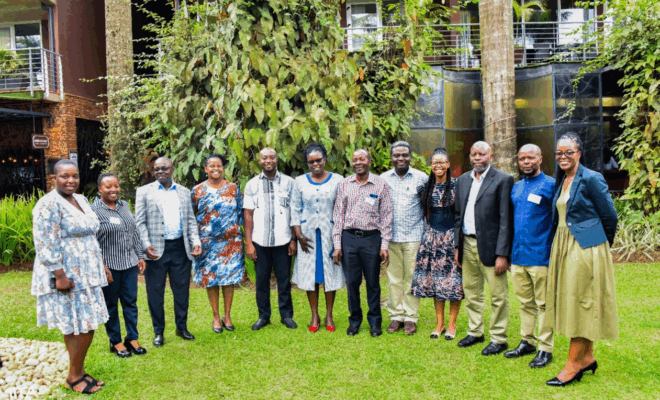
The commitment was highlighted during a stakeholders’ forum held in Ibadan, where government officials, development organisations, research institutions and farmer groups discussed strategies to enhance agricultural production and improve access to essential farming inputs.
Government Reinforces Commitment to Agricultural Growth

Representing the Commissioner for Agriculture and Rural Development, Barrister Olasunkanmi Olaleye, the Director of Research, Planning and Statistics, Mrs. Adeniran Funke, said the administration of Governor Seyi Makinde has made significant progress in developing the agricultural sector.
She noted that the state government remains focused on building strategic partnerships that support sustainable farming, increase productivity and strengthen resilience against climate-related challenges.
Participants at the forum stressed that food security remains fundamental to economic development, livelihoods and social stability, emphasizing the need for sustained investment in agriculture.
Irrigation Farming Identified as Key to Year-Round Production
A major focus of the discussions was the expansion of irrigation farming as a solution to seasonal production constraints.
Officials from the Ministry of Agriculture and Rural Development noted that rivers and water bodies across Ibadan and other parts of Oyo State already support small-scale vegetable farming. However, much of the available water infrastructure remains underutilised.
The government expressed readiness to work with development partners and private-sector stakeholders to expand irrigation systems that will enable farmers to produce crops throughout the year, increase yields and improve household incomes.
According to stakeholders, improved irrigation infrastructure could significantly reduce farmers’ dependence on rainfall and strengthen food production across the state.
Climate Variability Driving Need for Adaptation
The ministry also highlighted growing concerns over climate variability and its impact on agriculturalOyo State output.
Referring to forecasts from the Nigerian Meteorological Agency (NiMet), officials warned that changing rainfall patterns could affect crop production if farmers fail to adopt appropriate adaptation measures.
Farmers were encouraged to embrace early planting, utilise early-maturing crop varieties and integrate irrigation technologies into their production systems to minimise climate-related risks.
Experts at the forum noted that climate-smart agriculture will play an increasingly important role in safeguarding food supplies and ensuring long-term sustainability in the sector.
KickStart International Expands Irrigation Support
Development organisation KickStart International reaffirmed its commitment to supporting smallholder farmers through affordable irrigation solutions.
Speaking at the forum, West Africa Regional Manager Dr. Festus Ademola said the organisation’s MoneyMaker irrigation pumps are helping farmers engage in year-round cultivation, improve productivity and access higher-value markets during off-season periods.
He explained that the irrigation technology allows farmers to produce crops beyond the traditional rainy season, creating opportunities to earn more income when market prices are often higher.
Beyond equipment distribution, KickStart International also provides training on pump operation, maintenance and modern agricultural practices to ensure long-term sustainability and effective utilisation of the technology.
According to Ademola, empowering farmers to “make their own rain” remains a critical strategy for building resilience and improving rural livelihoods.
Research Institutions and Farmers Commit to Collaboration
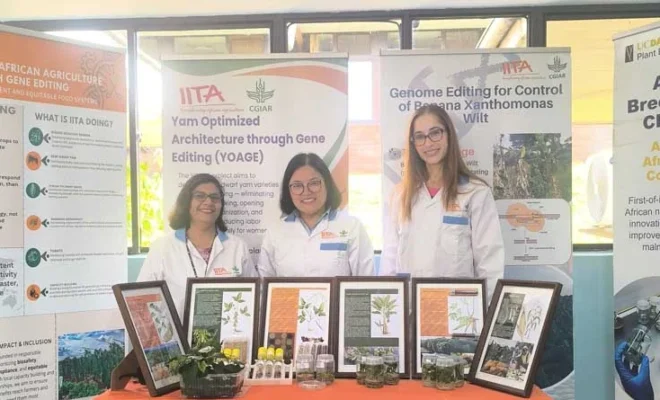
The forum brought together representatives from key agricultural institutions, including the International Institute of Tropical Agriculture (IITA), the Institute of Agricultural Research and Training (IAR&T), and the Cocoa Research Institute of Nigeria (CRIN), alongside farmer associations and development partners.
Participants pledged to strengthen collaboration in areas such as agricultural research, farmer training, irrigation development and technology adoption.
Stakeholders also emphasized the importance of promoting locally adapted and environmentally sustainable agricultural solutions capable of reducing post-harvest losses and increasing food availability in rural communities.
Strengthening Food Systems for the Future
The meeting concluded with a shared commitment to deepen investment in climate-smart agriculture, improve farmer capacity building and expand access to irrigation infrastructure across Oyo State.
Stakeholders agreed that strengthening food systems will require coordinated action from government agencies, research institutions, development partners and farming communities.
With growing climate challenges and rising demand for food, participants noted that sustainable agriculture and improved water management will be critical to enhancing productivity, strengthening rural economies and securing long-term food security across Oyo State.