
US Expands Agricultural Trade Support to Nigeria Through GSM-102 Credit Programme
Available in

US Expands Agricultural Trade Support to Nigeria Through GSM-102 Credit Programme
The United States has strengthened agricultural trade ties with Nigeria by expanding support through the Export Credit Guarantee Program (GSM-102), a financing tool designed to improve access to US agricultural products and inputs.
Administered by the United States Department of Agriculture, the GSM-102 programme provides government-backed credit guarantees that enable Nigerian banks and importers to secure financing when sourcing essential agricultural commodities from the United States. The initiative aims to enhance food supply chains, reduce trade risks and create new commercial opportunities for both countries.

The move comes amid growing economic ties between the two nations. Bilateral trade in goods and services reached nearly $15 billion in 2025, representing a 14% increase from the previous year. Agricultural trade has been a key driver of this growth, rising sharply to $764 million—an 84% increase from $415 million in 2024—highlighting Nigeria’s importance as a strategic agricultural trade partner.
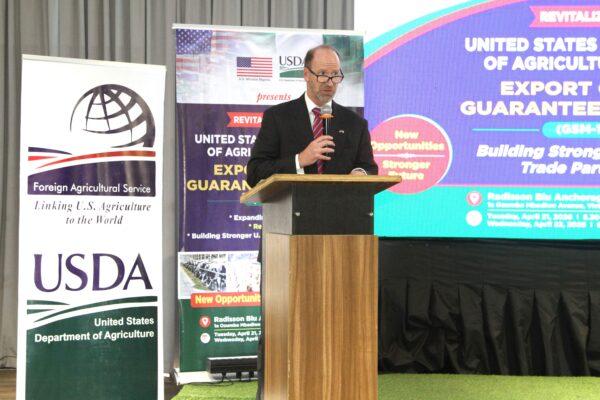
To boost awareness and uptake of the programme, the Foreign Agricultural Service of the US Consulate General hosted a two-day engagement in Lagos. The event brought together stakeholders including officials from the USDA, the US International Development Finance Corporation, the Nigerian-American Chamber of Commerce, US agricultural exporters, Nigerian financial institutions and agribusiness importers.
Speaking at the event, US Consul General Rick Swart emphasised Nigeria’s role as one of the United States’ most important agricultural partners in Africa. He highlighted a policy shift toward trade-led engagement, focusing on creating a business environment that supports entrepreneurs, investors and long-term commercial growth.
Participants at the event explored how GSM-102 can help Nigerian businesses expand access to US markets, improve food security and generate employment opportunities. Business-to-business discussions were also held to convert emerging opportunities into tangible trade deals.
According to Demeteris Hale, the programme plays a critical role in strengthening market confidence by reducing financial risk and enabling lenders and exporters to pursue new transactions and partnerships.
Following the reinstatement of Nigerian banks’ eligibility for the programme in late 2025, selected institutions have already received credit limits, restoring access to US-backed trade financing and supporting the continued growth of agricultural trade between the two countries.