
Nigeria and Germany Strengthen State-Level Cooperation to Improve Food Security

Available in

Nigeria’s federal government and Germany are working with state governments to improve food security, strengthen agricultural productivity and build more resilient livelihoods through coordinated policies and investment in the country’s agrifood sector.
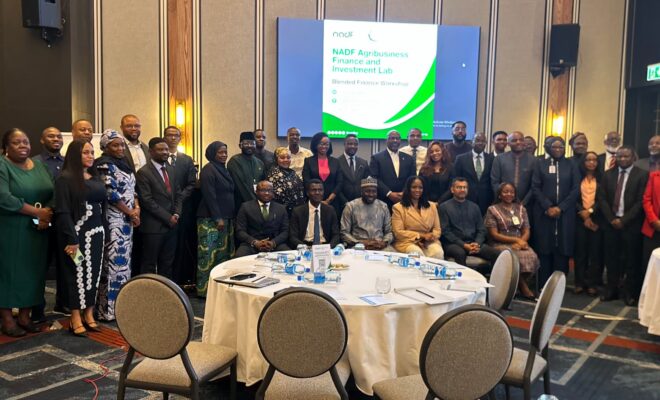
The initiative was discussed at a Community of Practice Summit organised by Nigeria’s Federal Ministry of Agriculture and Food Security in collaboration with the Borno State Government, with support from Germany. The summit took place in Maiduguri and brought together policymakers, agricultural experts, farmers, researchers, private-sector representatives and development partners.
Nigeria’s Minister of Agriculture and Food Security, Abubakar Kyari, said closer coordination between federal and state governments was essential to achieving sustainable food security. He stressed the need for aligned policies, reliable agricultural data, complementary investments and clearly defined responsibilities to ensure national commitments translate into practical improvements for farmers and rural communities.

The discussions focused on sustainable agricultural production, investment and financing, food and nutrition security, trade, inclusion, climate resilience and governance.
Nigeria aligns agricultural strategy with continental framework
Kyari said the engagement would incorporate the Kampala Comprehensive Africa Agriculture Development Programme (CAADP) Declaration and its Strategy and Action Plan for 2026–2035.
The framework promotes a broader approach to agrifood development, bringing together agricultural production, nutrition, investment, trade and environmental resilience.
According to the minister, Nigeria has developed and validated a 10-year National Agrifood System Strategy and Action Plan to guide the implementation of its commitments under the Kampala framework.
He urged state governments to align their agricultural development plans with national priorities, particularly in rural infrastructure, extension services, access to credit and quality inputs, labour-saving technologies, post-harvest loss reduction and climate-resilient farming.
Improving these areas could help farmers increase output, reduce production risks and strengthen their access to markets. Better storage and handling facilities could also limit food losses and improve the reliability of supplies reaching consumers and processors.
Germany supports policy implementation and accountability
Dr Karin Jansen, Head of Development Cooperation at the German Embassy in Nigeria, said Germany was supporting the country’s implementation of the Kampala Agenda by strengthening the institutions and processes needed to translate agricultural policies into action.
She identified coordination, policy alignment and state-level implementation, alongside monitoring and accountability, as key areas of support.
The programme will seek to improve cooperation among federal institutions, state governments and non-state actors through mechanisms such as the CAADP Community of Practice.
It will also support a review of Nigeria’s National Agricultural Technology and Innovation Policy (NATIP) 2022–2027 and build capacity in selected states to align their State Agricultural Development Plans with the Kampala framework and Nigeria’s Third Nationally Determined Contribution (NDC 3.0).
Additional measures include support for the CAADP Biennial Review, the development of Joint Sector Reviews covering 2024–2026 and consultations on the 2027 Food Systems Budget. These initiatives are intended to strengthen evidence-based policymaking and improve oversight of agricultural programmes.
Opportunities for farmers and agribusinesses
Stronger coordination between national and state authorities could create opportunities for farmers, agricultural cooperatives and small and medium-sized agribusinesses by improving access to finance, quality agricultural inputs, technical advice and modern farming technologies.
Investment in rural infrastructure and climate-resilient production could also strengthen supply chains and help farming communities manage environmental and economic shocks.
However, the impact will depend on how effectively policies are implemented at state level, how funding is allocated and whether farmers can access the services and resources promised under the programme.
The Maiduguri summit forms part of wider efforts to strengthen Nigeria’s agrifood system through coordinated planning, institutional capacity-building and improved accountability.
As Nigeria seeks to improve domestic food supplies and agricultural competitiveness, closer cooperation between federal and state governments, supported by international development partners, will be important in translating policy commitments into measurable gains for producers and consumers.